
What to Do When a Wood Deck Fuzzes After Pressure Washing
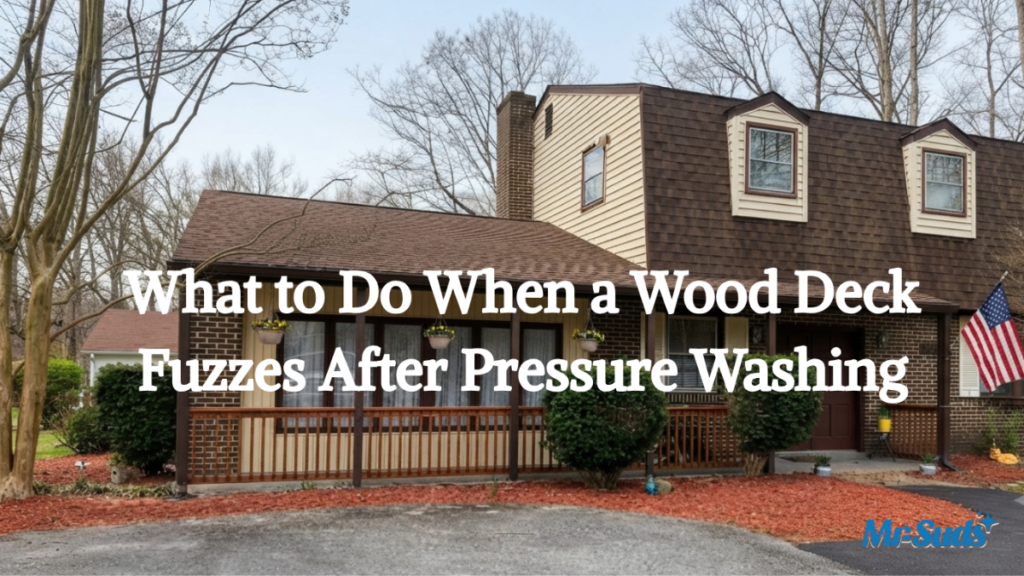
A deck looks fuzzy after pressure washing because the wand cut the soft spring growth out of the boards and left the harder summer growth standing. That fuzz is torn wood fiber, not dirt, so washing again will not remove it. Let the deck dry, brighten it, then sand. This is the single most common […]
What to Do When Your Pool Deck Becomes Slippery Again
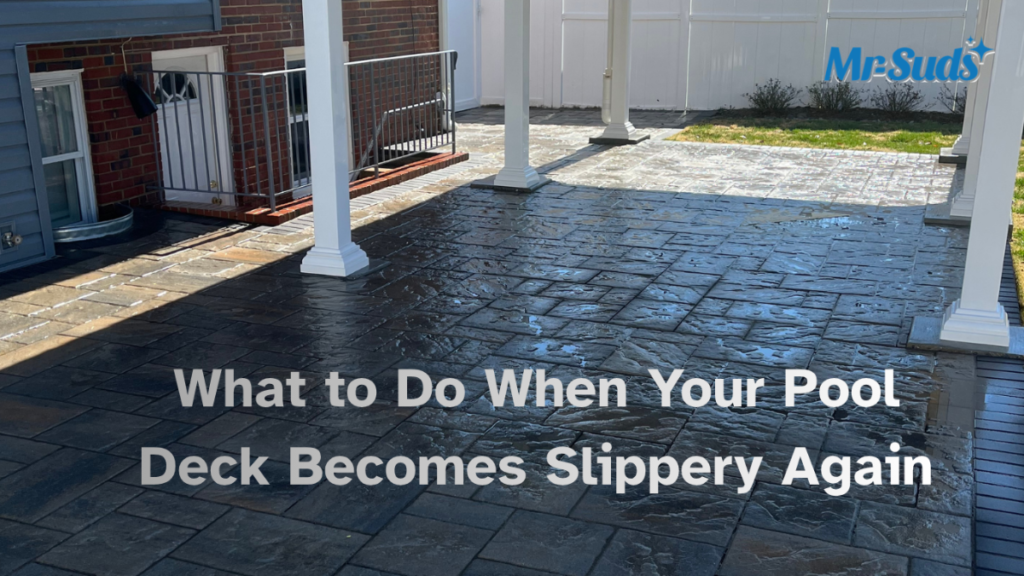
A pool deck that turns slippery again within weeks was cleaned, not treated. Chlorine bleach removes the color from algae but leaves the biofilm and spores inside the pore structure. Lasting traction takes a soft wash with proper dwell, a spore-targeting post-treatment, and restored surface texture. That is the mechanism. The rest of this page […]
What to Do When Weeds Return in Paver Joints Within Weeks
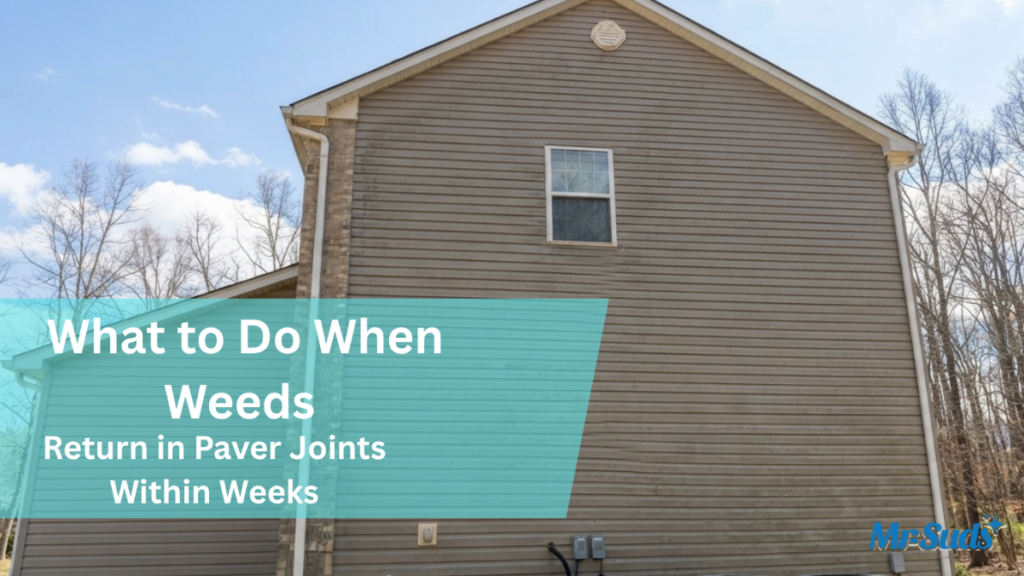
Weeds return in paver joints within weeks because spraying kills the plant but leaves the seed bed. Weed seed and organic silt collect inside the joint from the top down, not from the base. To stop the cycle, remove the growing medium, clear the joint to depth, and refill with properly compacted joint sand. If […]
What to Do When Concrete Etches or Stripes After Washing
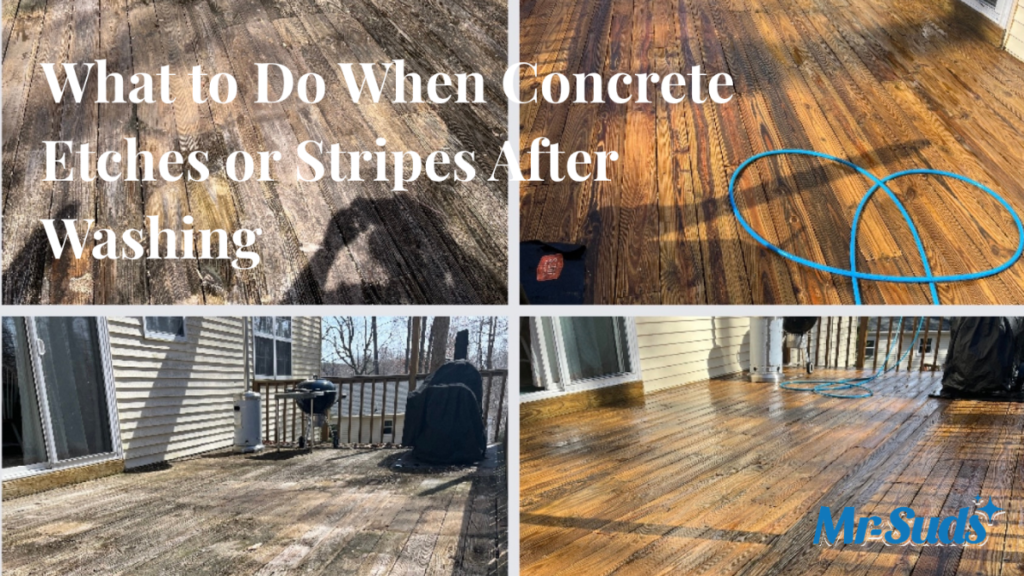
Stripes after pressure washing are not leftover dirt, they are etching. The wand cut through the smooth cement paste on the surface and exposed the sand below, so the marks cannot be washed away. Light banding weathers out, medium etching needs the whole slab cleaned evenly, and deep etching needs resurfacing. Roman puts it in […]
What to Do When Sealer Turns Cloudy or White on Pavers
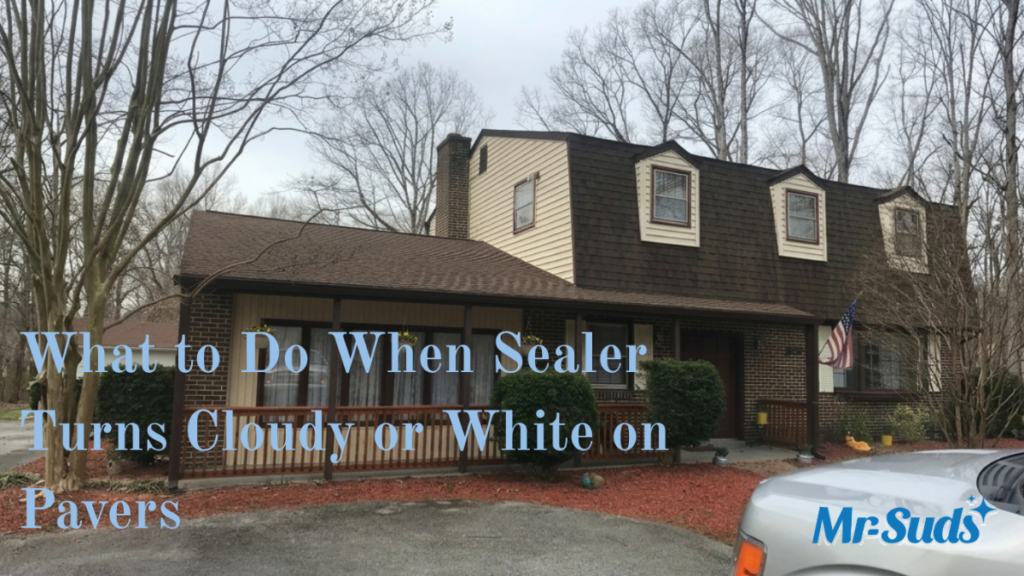
Cloudy or white paver sealer is almost always trapped moisture, not a bad product. Sealing damp pavers, applying one heavy coat, or working near the dew point traps water inside the curing film and it turns milky. Solvent-based sealers can often be cleared with xylene. Water-based and efflorescence cases need stripping. First, Your Pavers Are […]
What to Do When Pavers Shift After Cleaning
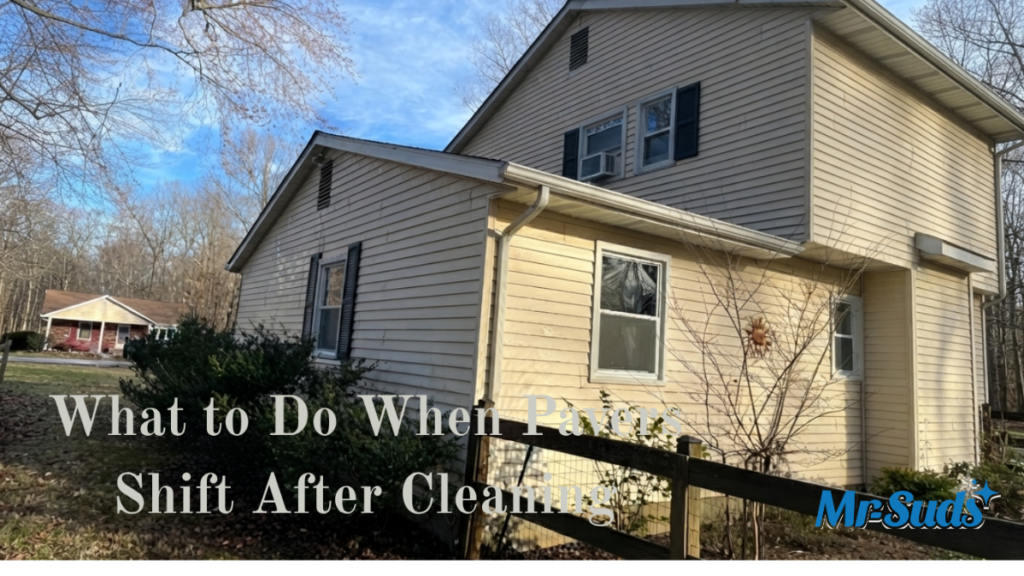
Quick Answer: Why Your Pavers Moved and What to Do First Pavers shift after cleaning because high pressure stripped the joint sand out of the joints. That sand is structural. It transfers load between pavers and creates interlock. Once it is gone, each paver moves alone. Diagnose whether you lost only joint sand or also […]
What to Do When Rust Bleeds Through Concrete From Fertilizer
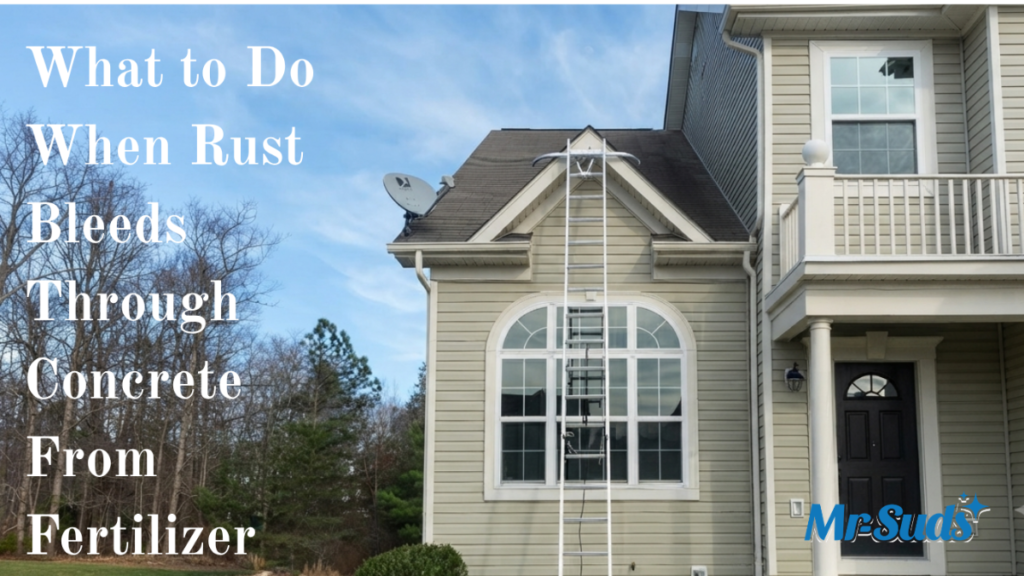
The orange bleeding through your concrete is iron oxide, not dirt. Fertilizer with iron or ferrous sulfate landed on the slab and oxidized. Bleach and degreasers will not touch it, and pressure only etches the surface. It takes an acid based or chelating rust remover, correctly diluted, dwelled wet, then neutralized. That is the short […]
What to Do When Oil Stains Will Not Come Off a Newington Driveway
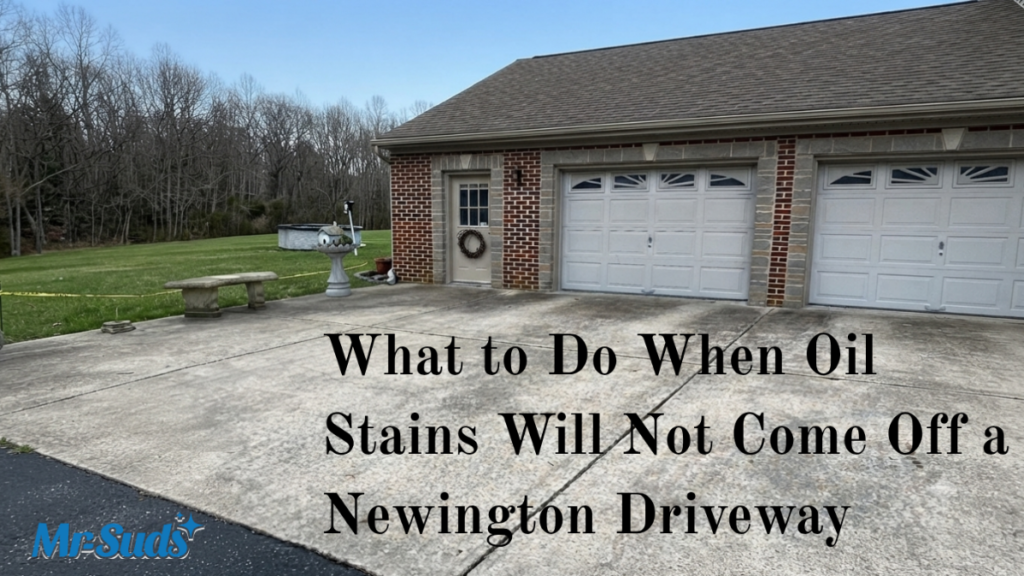
If oil will not come off your driveway, pressure is not the answer. Oil wicks into the capillary pores of concrete, below where water pressure reaches. You have to absorb what is liquid, emulsify the rest with an alkaline degreaser at full dwell, then lift it with hot water. Pressure did not fail you. Chemistry […]
What to Do When Gutter Guards Trap Debris on Top
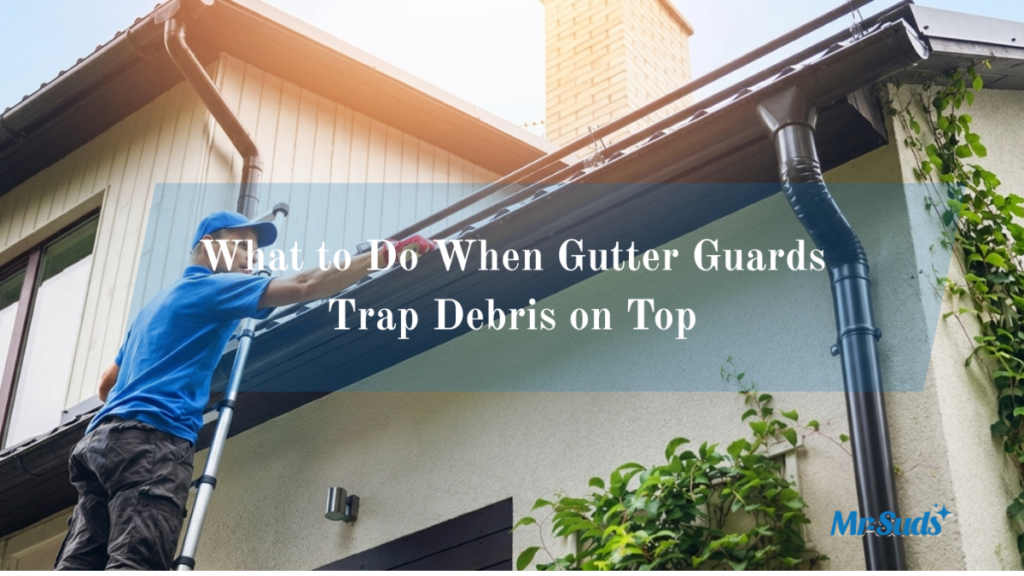
Quick Answer Debris on top of gutter guards is normal, not a defect. Clear it with a leaf blower on dry days or a soft bristle brush pulled downward off the guard, never with a pressure washer, which deforms mesh and pushes debris into the trough. Then hose test the run and downspouts. That is […]
What to Do When Ice Dams Form Every Winter in Newington
Ice dams form when heat escaping your attic melts snow on the upper roof and the water refreezes at the cold eave. To handle one now, rake snow off the lower three to four feet of roof from the ground and lay a calcium chloride sock across the dam to melt a drain channel. Never […]