
Deck Power Washing in Hartford, CT
Wood or composite, I match the pressure to your decking before anything gets sprayed. The algae, the black spotting and the gray come off. The boards stay smooth.
Free on-site estimate, and a fixed price in writing before I start.
- 5.0 on Google (35 Reviews)
- Insured and Bonded
- Owner on Every Job
- Wood, Composite and Paver Safe
Deck Power Washing
Professional Deck Power Washing for Hartford Homes
Most decks around here do not need replacing. They need the growth pulled out of the grain and the surface brought back, and on a sound deck that is one afternoon of work.
That is what deck power washing in Hartford, CT is for. Not a facelift. A reset.
I clean the whole structure, not just the floor. A lot of quotes cover the boards and quietly leave off everything you actually put your hands on.
Every deck wash includes:
- All the deck boards, including the strip that sits under the furniture line
- Railings, top caps, balusters and spindles
- Stairs, treads and stringers
- Fascia boards and any visible skirting
- Built-in benches and planter boxes where you have them
- A rinse of the surrounding hardscape so nothing dries streaky
Diagnosis First
What Is Actually on Your Deck
Gray, weathered boards that lost their color
Sun does that. UV breaks down the surface layer and the color goes flat and silver. On a sound deck it washes back, further than most people expect. On a deck that has been holding water for years, gray is the smallest problem, and I cover that below.
Dark blotches where leaves sat all winter
That is tannin staining. Oak and maple leaves pile into a corner, get wet, and leach a brown stain down into the wood. Homeowners usually assume it is permanent. Most of the time it comes out with the right cleaner and a brightener. If those same trees are filling your gutters, gutter cleaning and brightening and soft wash roof cleaning are worth doing on the same visit.
Black spotting and mildew down in the grain
Those small black dots are not dirt, and scrubbing will not lift them. The growth sits inside the open grain, which is exactly why cleaner and dwell time do the work and pressure does not. Left alone it holds moisture against the board straight through a Connecticut winter.
Green algae on the shaded side and under the rails
Hartford has real tree cover, and shade plus damp is all algae needs. It shows up first on the north side and in the shadow line under the railings. It gets slippery long before it looks bad.
Slippery boards and moss packed in the gaps
Moss wedges into the gap between boards and holds water there. That is a rot problem and a slip problem at once.Stairs get attention first, because stairs are where people actually fall.
Rust streaks running down from the screws
Older fasteners bleed rust into the wood around them and it runs with every rain. The surface staining cleans up.If the streaking is heavy across the whole deck, that usually tells me the fasteners are near the end of their life.
White chalky haze on composite boards
Composite oxidizes too. The cap layer chalks and the color dulls, worst on older boards in full sun.That gets a composite-safe cleaner and a gentle rinse. Never a turbo tip.
See what is actually growing on your boards. Free estimate.
The Numbers
What PSI Should Be Used on a Deck?
Softwood decks like pressure-treated pine and cedar are usually cleaned starting around 500 to 600 PSI with a wide fan tip. Dense hardwoods can take more. Composite has its own manufacturer ceiling. Anything above what the material can handle raises the grain and leaves permanent marks that only sanding removes.
Ask five companies what pressure they will use and you will get five versions of “the right pressure.” Nobody says a number. So here are mine.
| Decking | Typical working pressure | Notes |
|---|---|---|
| Pressure-treated pine, cedar, redwood | Start low, around 500 to 600 PSI | Softwoods mark easily. Wide fan tip, moved with the grain |
| Dense hardwoods (ipe, mahogany) | Tolerates more, still tested first | Always tested in an out of the way spot before the main deck |
| Capped composite | Manufacturer ceiling applies | Trex publishes a maximum of 3,100 PSI using a fan tip held no closer than eight inches from the boards, and notes that around 1,500 PSI is adequate for routine cleaning |
| Early-generation composite | Manufacturer directs a gentler method | Trex names Accents, Origins and Contours here. These get a cleaning solution, a soft brush and a low-pressure rinse |
| PVC and other brands | Varies widely by brand | Several brands sit well below Trex. The specific product gets checked, not guessed |
Those are published care instructions, not my opinion. Cleaning a composite deck outside the manufacturer’s stated method is also the sort of thing that comes up if you ever need to make a warranty claim, so I stay inside it. You can read Trex’s care and cleaning guidance yourself.
What furring is, and why you cannot rinse it off
Too much pressure, or a turbo nozzle, tears the surface fibers of the wood instead of cleaning them. The board comes out looking fuzzy and feeling rough.
That is furring, also called raised grain. You cannot wash it smooth again. It has to be sanded.
And a furred board has more open surface holding water, so it grows mold faster than it did before it was cleaned. That is the part most homeowners never hear until it has already happened to them.
Why I do not put a turbo nozzle on decking
A turbo tip spins a pinpoint stream in a tight circle. It cuts fast, which is why it is popular on concrete.
On wood it leaves wand marks and stripes that only appear once the boards dry. By then the job is paid for and the marks are permanent.
Ask me what pressure I will use on your deck. I will tell you before I quote.
Material Matters
Wood and Composite Are Not Cleaned the Same Way
On wood, the growth lives in the grain. Detergent and dwell time lift it out and the water only rinses it away. A wood brightener afterward resets the pH and brings the grain color back without furring the surface, which matters twice over if stain is going on later.
On composite, the cap layer is the whole product. Bleach lightens it. Hard pressure etches the embossed grain, and once that cap is opened the board is more porous than it was and grows mold more easily than before.
| Wood decking | Composite decking | |
|---|---|---|
| Main risk | Furring and raised grain | Etching the cap layer |
| Cleaning agent | Detergent plus dwell, then wood brightener | Composite-safe cleaner, no bleach |
| Role of pressure | Rinsing only | Rinsing only, inside the manufacturer ceiling |
| Can it be stained after | Yes, once fully dry | No, composite is not stained |
| If it gets damaged | Sanding | Nothing. The cap does not come back |
Concrete and driveways are a different job again, with a different machine. That is driveway and concrete cleaning.
Step by Step Process
How a Deck Wash Runs, Start to Finish
1. You call or send photos
I can usually give you a ballpark on the phone, then book a free look in person.
2. On-site inspection
The first thing I do is press a thumbnail into a board near the stairs. If it goes in easy, that board has been holding water a long time and no amount of pressure fixes it.
3. Clear and protect
I move deck furniture, the grill and planters within reason. Anything heavy, fragile or personal is better inside before I arrive. Plants under and around the deck get pre-soaked.
4. Cleaner goes on and gets time to work
Not blasted on. The detergent lifts the growth while I work my way around the rest of the deck.
5. Rinse at the right pressure for your material, then brightener on wood
Surrounding plants and hardscape get rinsed again afterward so nothing is left sitting.
6. We walk it together
I show you the boards, tell you when furniture can go back, when it is safe to walk on, and if you are staining, when the wood will actually be ready.
Transparent Pricing
How Much Does It Cost to Power Wash a Deck in Hartford, CT?
Most deck washes are priced by square footage. Published 2026 national cost data puts professional deck power washing at roughly $0.35 to $0.77 per square foot, so a typical 300 to 500 square foot deck usually lands somewhere between $150 and $400 once railings and stairs are counted in.
Those are national figures, not my quote. Your deck gets a real number once I have seen it, and that number does not move afterward.
What moves your number:
- Square footage, and whether it is one level or two
- Railings, balusters and stairs, which take longer per square foot than open decking
- The material and the condition, and how long since the last clean
- Access, including tight side yards and second-story decks
- Wood brightener, and whether the deck is being prepped for stain
Booking the deck with the house saves money
Most of the decks I clean get done the same day as the house. One trip, one setup, one mobilization instead of two, and the price reflects that.
Read the reviews and you will see the pattern: house and deck, house and walkway and deck, home and shed and steps. That is how people actually buy this.
If your siding is due anyway, ask for the combined number with house washing in Hartford CT, fence cleaning or pool deck cleaning before you book the deck on its own.
Why the cheapest deck quote usually costs more
A very low number normally means something was left out. Furniture not moved. Railings and spindles not included. Stairs quoted separately. No landscape protection.
And often a turbo nozzle, because it is faster. Sanding a furred deck costs more than the wash did.
Gray Boards: What Comes Back and What Does Not
Gray from sun and weather is surface level. It cleans up, and with a brightener the grain color comes back further than people expect.
Gray with soft spots is a different animal. If you can press a thumbnail into a board, or it feels spongy underfoot near the stairs, that is rot. Washing does not reverse rot, and heavy pressure makes it worse by tearing out the softened fiber.
Splintering and cupping are carpentry, not cleaning. Those boards need sanding or replacing, and no pressure washer changes that.
I will tell you which one you have at the estimate, before any money changes hands. Sometimes the honest answer is that a wash buys you two more seasons and you should start planning for boards after that.
Stain Prep
Getting a Deck Ready to Stain or Seal
Wait at least 48 hours after washing before staining a deck, and 72 hours if the deck sits in shade. The wood has to be dry all the way through, not just on top. Most stain manufacturers want moisture content below about 15 percent before the first coat goes on.
Straight answer on this one: I clean and prep, I do not apply stain or sealer. What you get from me is a deck that is genuinely ready for it, plus a date you can put in the calendar.
How to tell your deck is dry enough
Sprinkle a few drops of water on the boards. If they bead up, the wood is still holding moisture. If they soak straight in, you are close.
The accurate version is a moisture meter checked in several spots, because a board in full sun and a board under the rail dry at different rates. The shaded one decides.
Why wood brightener matters before stain
Cleaning shifts the pH of the wood. A brightener neutralizes it and opens the grain so the stain penetrates instead of sitting on the surface.
Skip it and the stain often goes on uneven, then peels early in patches. That is usually what happened when somebody tells me their last stain job did not last.
Timing it around Connecticut weather
Stain needs a dry window on both ends: dry boards going in, and no rain for a day or two after.
In Central Connecticut that realistically means late spring through early fall. Plan the wash and the stain as one project with two visits, not two separate decisions made a month apart.
Patio and Paver Cleaning in Hartford
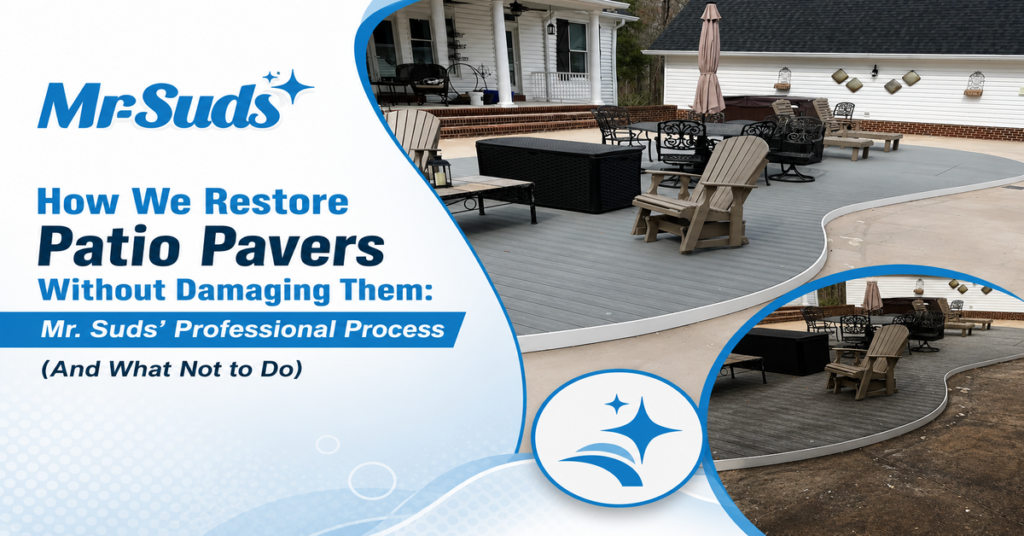
A patio is close to the opposite job. Stone and concrete take real pressure, and they take it through a surface cleaner, which is the round unit that keeps the spray even.
That is what gives you a clean slab instead of the zebra striping a wand leaves behind.
I clean poured and stamped concrete, brick, bluestone, flagstone and concrete pavers. Moss and weeds in the joints, black algae in the shaded corners, efflorescence, winter salt residue and grill grease all come off.
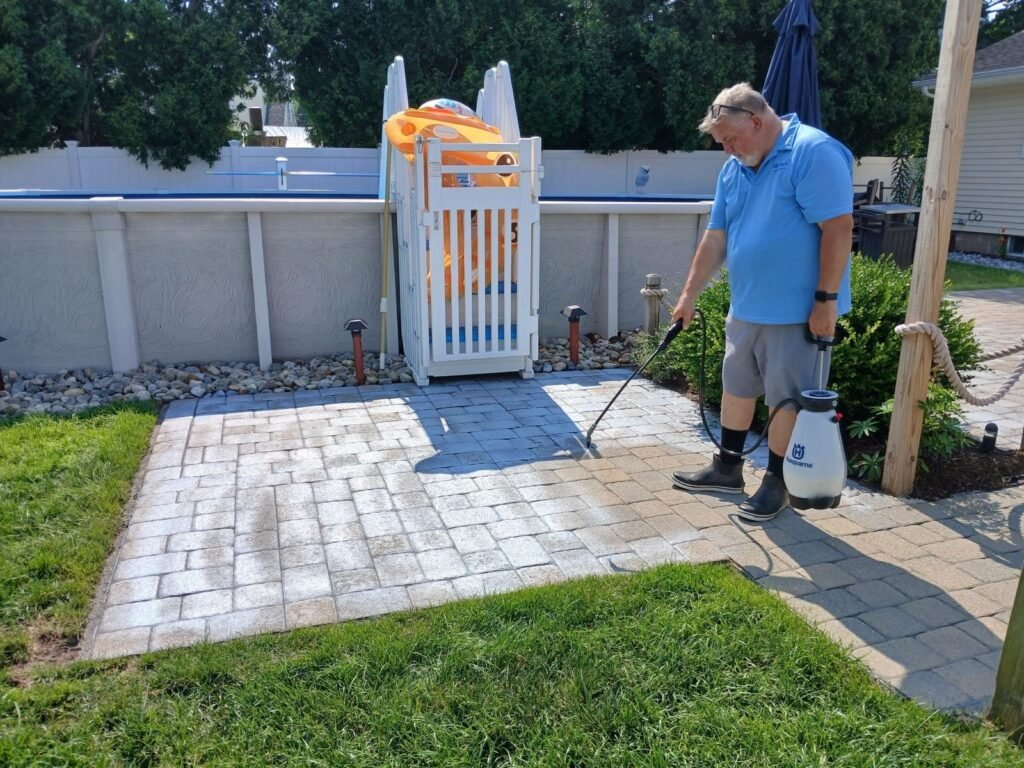
One honest note on pavers. Cleaning flushes some of the joint sand out, so the joints usually need re-sanding afterward. If you have searched patio power washing near me and want it done properly, that step is part of the job, not a surprise line item.
Pool surrounds are their own thing, with slip safety and chlorine exposure to think about. That is pool deck cleaning.
Deck and patio in one visit. Ask for a combined quote.
Why Mr-Suds
Why Hartford Homeowners Book Their Decks With Mr-Suds
I am Roman. I own Mr-Suds and I am the one on your deck. That is not a positioning line, it is just how the business is built, and it is why the reviews use my name instead of the company’s.
The owner is on every job
No rotating crew, no subcontractor you have never met.
5.0 on Google across 35 reviews
Read them yourself, they are linked below.
Insured and bonded
Certificate of insurance available on request, before I start, not after.
Local, not regional
Based in Newington and working across Greater Hartford. I am fifteen minutes from most of the decks I clean.
Satisfaction guarantee
We walk the deck together at the end. If something got missed, I come back and finish it.
How to check any exterior cleaning contractor in Connecticut
Four questions, five minutes:
- Ask for the certificate of insurance, not a claim that one exists.
- Ask what pressure they will use on your specific decking. This is the one most companies cannot answer.
- Ask whether railings, spindles and stairs are inside the quoted price.
- Look the company up on the Connecticut Department of Consumer Protection eLicense system.
I answered the second one further up this page. Ask the next company the same thing and see what you get.
What a Real Deck Job Looks Like
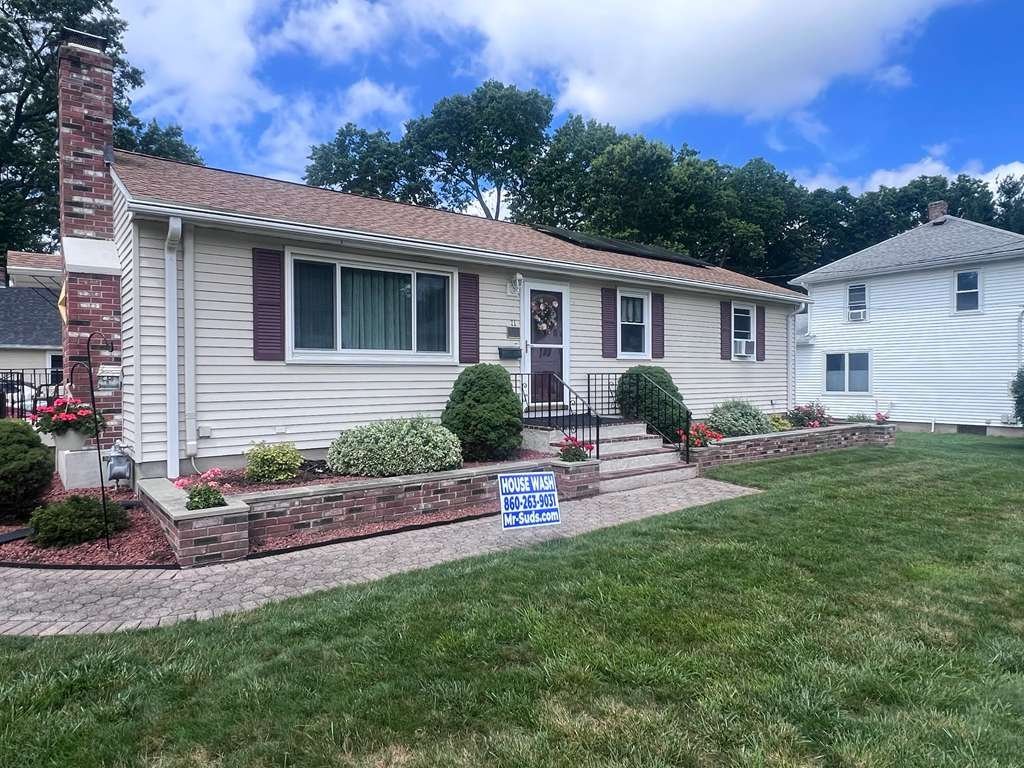
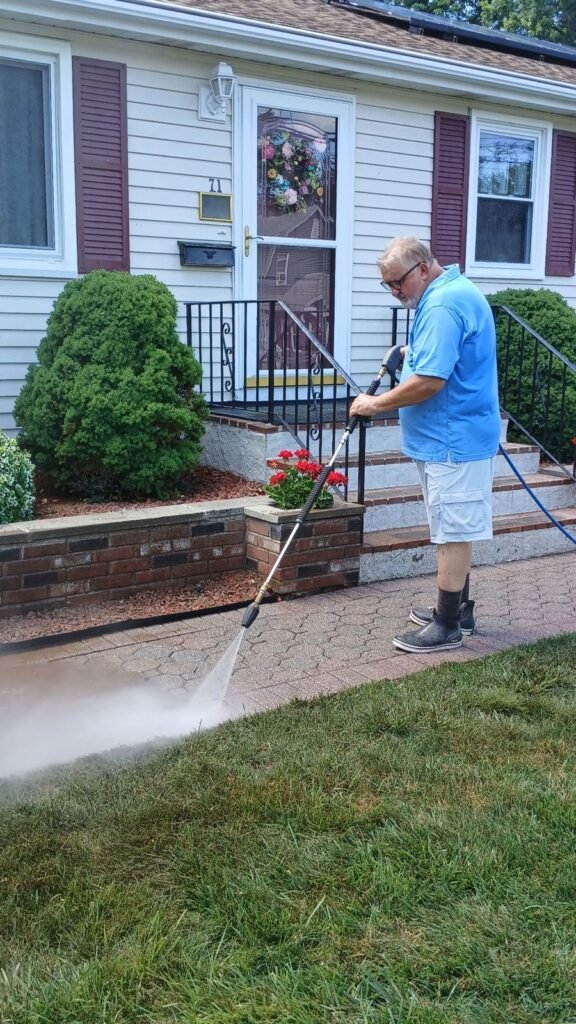
One job comes up whenever people ask what to expect. A homeowner booked the house, the walkway and the deck in a single visit.
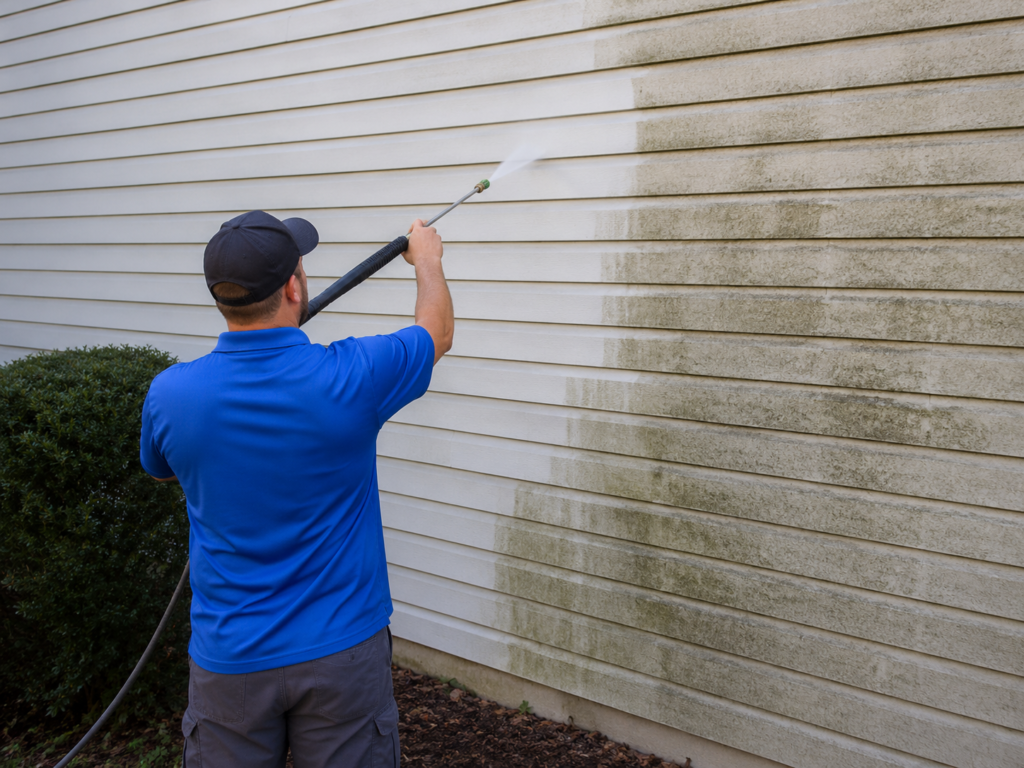
The deck was the part they were unsure about. Shaded down one side, green along the rail line, boards gone flat and gray.
Low pressure and a proper cleaner handled the siding. The deck got detergent, dwell time, a controlled rinse and a brightener afterward. Nothing was blasted.
What they said afterward was that everything looked brighter, and that they were amazed by the improvement. That is the honest version of the result. Not new. Brighter, cleaner, and usable again.
Customer Reviews
What Hartford-Area Homeowners Say
Thirty-five reviews, all five stars, and the deck jobs are in there.
One customer had the exterior and the deck done together and said both came out looking like new. Another had the house, walkway and deck soft washed and described everything looking brighter.
They are all public. Read the Google reviews, then go read the ones for whoever else you are considering.
Before and After
Real photos, real decks, all of them in and around Hartford. No stock imagery.
Each pair is captioned with the material and the general area, so you can find something close to your own deck.
Service Area
Deck Power Washing Across Hartford, CT and the Towns Around It
In the city I work a lot in the West End, where the streets around Elizabeth Park have canopy over almost every backyard. Shade all afternoon and heavy leaf drop every fall is exactly the combination that produces algae and tannin blotches.
Blue Hills near Keney Park is similar, with plenty of decks built off ranches and split-levels that sit low and stay damp. Barry Square near Colt Park and the South End around Goodwin Park run to older Colonial Revival and Craftsman homes, where the deck is usually an addition and the wood is a mix of ages.
Behind the Rocks, Parkville, South West and Asylum Hill are all on the route too.
Outside Hartford I cover West Hartford, Newington, Wethersfield, Rocky Hill, Glastonbury, Bloomfield, Farmington, Avon, Berlin, Simsbury, Cromwell, Plainville and Southington. If you have been searching deck power washing near me from any of those, you are inside my area.
One honest word about the season. Deck power washing in Hartford, CT runs roughly April through November. Spring is the heaviest stretch, because decks come out of winter carrying leaf residue and mildew, and because anyone planning to stain wants the wash done first.
Booking early means picking your date instead of taking what is left.
Pairs Well With
Other Exterior Cleaning I Handle
Most decks get booked alongside something else. These are the ones that usually pair with it:
- House washing in Hartford CT for siding, soffits and trim
- Wood and vinyl fence cleaning, same wood rules as the deck
- Pool deck cleaning for surrounds where slip safety matters
- Driveway and concrete cleaning, the high-pressure end of the work
- Soft wash roof cleaning for black streaking on shingles
- Gutter cleaning and brightening, worth doing while the deck is clear anyway
Frequently Asked Questions
Deck Power Washing FAQs
Published 2026 national cost data puts it at roughly $0.35 to $0.77 per square foot, so most 300 to 500 square foot decks land between about $150 and $400. Railings, stairs, condition and access all move the figure. You get a fixed written number after a free on-site look.
Softwoods like pressure-treated pine and cedar start around 500 to 600 PSI with a wide fan tip. Dense hardwoods take more. Composite follows the manufacturer’s published ceiling. The pressure is only there to rinse. The cleaner does the actual work.
Yes, inside the manufacturer’s limits. Trex publishes a maximum of 3,100 PSI using a fan tip held no closer than eight inches from the boards, and notes that around 1,500 PSI is adequate for routine cleaning. Early-generation lines are directed to a gentler method instead. Bleach lightens composite, so it never goes near it.
It can, at the wrong pressure or with the wrong tip. Too much force tears the surface fibers and leaves the board fuzzy, which is called furring, and that only comes out with sanding. A turbo nozzle leaves stripes that show up once the wood dries.
At least 48 hours, and 72 if the deck sits in shade. Most stain manufacturers want moisture content under about 15 percent. Sprinkle water on the boards first. If it beads, they are still wet. If it soaks straight in, you are close.
Once a year suits most decks here. Decks under mature trees, or ones that stay shaded through the afternoon, often need it more often because they never fully dry between rains. Annual cleaning also stops growth from working deeper into the grain.
April through November, with spring the busiest by a distance. Decks come out of winter carrying leaf residue and mildew, and staining projects get planned for spring, which pulls the wash date earlier. Once nights sit near freezing, the season closes.
Yes, deck furniture, the grill and planters within reason. Anything heavy, fragile or personal is better taken inside before I arrive. Plants under and around the deck are pre-soaked before the cleaner goes on and rinsed again afterward.
Gray from sun usually cleans up and the color comes back with a brightener. Gray with soft or spongy boards is rot, and washing will not reverse it. Splintering and cupping need sanding or replacement, which is carpentry rather than cleaning.
Not required, but it helps on wood. Sealer slows water absorption and UV graying, which is the main thing aging your boards through a Connecticut winter. Composite is not sealed. If you are sealing, the wash comes first and the wood has to be dry.
Get Your Free Deck Power Washing Quote in Hartford, CT
Your deck is the part of the house you actually sit on, and usually the part that waits longest. If the boards are sound, it does not take much to bring them back.
Deck power washing in Hartford, CT starts with a free on-site estimate and a fixed price in writing. Call and tell me what you have, or send a photo if you are not sure what it is made of.
Mr-Suds Power Washing PROs
130 Dewey Ave, Newington, CT 06111
Phone: (860) 263-9031
Email: roman@mr-suds.com
Serving Hartford and Greater Hartford, Connecticut
Rated 5.0 on Google