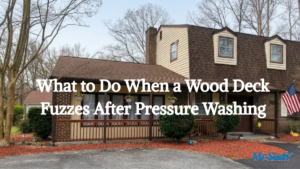
What to Do When a Wood Deck Fuzzes After Pressure Washing
A deck looks fuzzy after pressure washing because the wand cut the soft spring growth out of the boards and left the harder summer growth standing. That fuzz is torn

A deck looks fuzzy after pressure washing because the wand cut the soft spring growth out of the boards and left the harder summer growth standing. That fuzz is torn
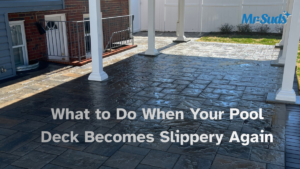
A pool deck that turns slippery again within weeks was cleaned, not treated. Chlorine bleach removes the color from algae but leaves the biofilm and spores inside the pore structure.
Weeds return in paver joints within weeks because spraying kills the plant but leaves the seed bed. Weed seed and organic silt collect inside the joint from the top down,
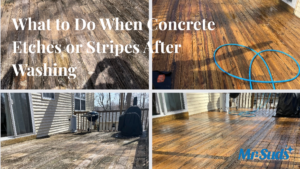
Stripes after pressure washing are not leftover dirt, they are etching. The wand cut through the smooth cement paste on the surface and exposed the sand below, so the marks
Cloudy or white paver sealer is almost always trapped moisture, not a bad product. Sealing damp pavers, applying one heavy coat, or working near the dew point traps water inside
Quick Answer: Why Your Pavers Moved and What to Do First Pavers shift after cleaning because high pressure stripped the joint sand out of the joints. That sand is structural.

The orange bleeding through your concrete is iron oxide, not dirt. Fertilizer with iron or ferrous sulfate landed on the slab and oxidized. Bleach and degreasers will not touch it,
If oil will not come off your driveway, pressure is not the answer. Oil wicks into the capillary pores of concrete, below where water pressure reaches. You have to absorb

Quick Answer Debris on top of gutter guards is normal, not a defect. Clear it with a leaf blower on dry days or a soft bristle brush pulled downward off

Ice dams form when heat escaping your attic melts snow on the upper roof and the water refreezes at the cold eave. To handle one now, rake snow off the