
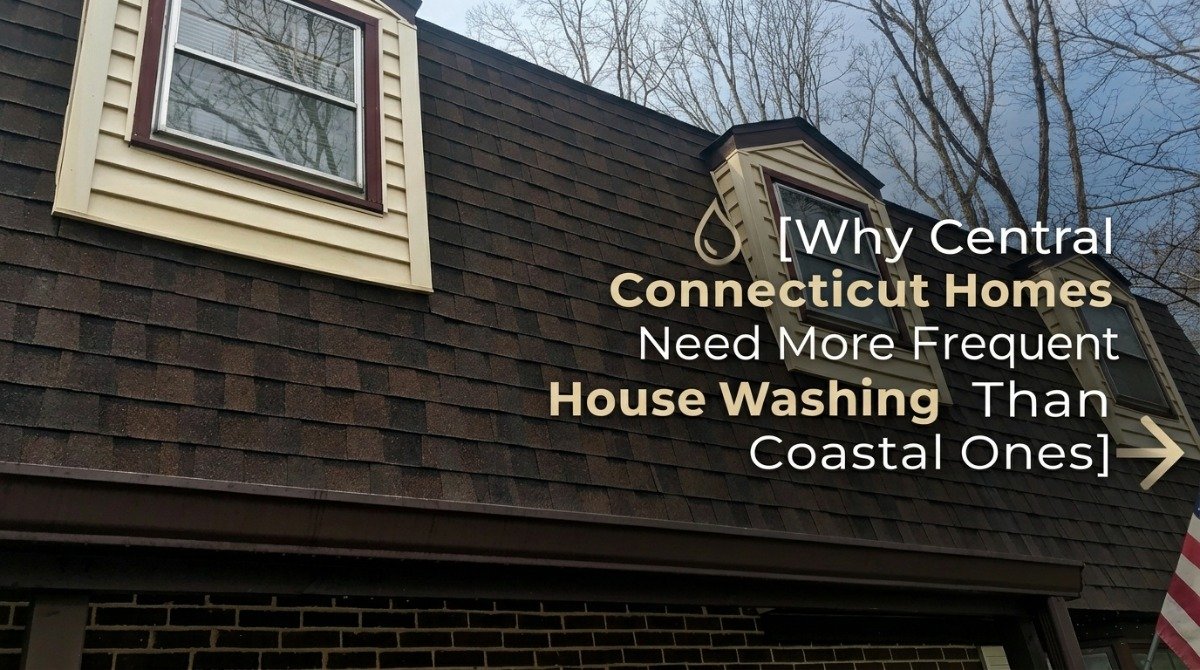
Last spring I pulled into a driveway in Newington for a return visit. Before I was out of the truck, I could see what had come back first. A light green film on the shaded side, a yellow haze of pollen along the gutters, and a deck starting to go gray again.
The homeowner met me with the same question from our first visit. “How often do I really need to be doing this?”
It is a fair question. Inland homes around Hartford need more frequent house washing than homes on the shoreline, and it is not because anyone is doing something wrong. People who moved up from the coast often say their old place never greened up this fast.
Below I walk through what is different inland, where shoreline homes actually have it harder, and a surface by surface schedule for Central Connecticut.
How often should you wash your house in Central Connecticut?
In Central Connecticut, most homes do well with a soft wash of the siding every 12 to 18 months, with shaded walls done yearly. Roofs usually need cleaning every 2 to 4 years, decks yearly, and gutters twice a year. Hotter days, heavy dew, trees and pollen make inland homes grow algae faster than shoreline homes.
These are the typical ranges I see on our jobs around Hartford, not fixed rules.
| Surface | Typical range in Central CT |
| Siding | Every 12 to 18 months, shaded walls yearly |
| Roof | Every 2 to 4 years, when streaks return |
| Deck | Yearly, in spring |
| Gutters | Spring and fall |
| Driveway and walks | Every 1 to 2 years |
What makes inland Central Connecticut call for frequent house washing?
Hartford and the towns around it sit well inland, in the Connecticut River Valley. Here are the factors I see most often on our jobs.
Hotter summer days in the river valley
Hartford averages about 13 days a year at 90 degrees or hotter, compared with about 4 in New Haven, according to NOAA’s state climate summary for Connecticut.
Warm surfaces plus moisture make a long, fast growing season for algae and mildew. More hot days means more growth between washes.
Cooler nights, wetter mornings
At the Bradley International Airport station that serves Hartford, July averages run about 85 degrees for the high and 63 for the low (1991 to 2020 normals). Bridgeport, on the coast, averages about 83 and 68. That is a swing of about 22 degrees inland and about 15 at the shore.
When a surface cools that much overnight, it drops to the dew point more often. Roofs, siding and decks start the day wet. Long term averages put Hartford mornings at 83 percent humidity in August and 86 percent in September, against 80 and 82 percent in Bridgeport.
To be fair, the shoreline air is not drier. Bridgeport’s average July dew point is about 63 degrees, a little above Hartford’s 61. The inland difference is the nightly wetting and the slow drying in still, shaded yards.
Calmer air and the valley at night
The shoreline gets a daytime sea breeze blowing from the water onto land. Moving air dries surfaces.
Hartford sits too far inland to count on it. On calm nights, valleys can also hold a temperature inversion, a layer of warmer air over cooler air. It keeps cool, moist air and pollutants close to the ground, right where your siding and deck are.
More trees around the house
Greater Hartford suburbs are heavily treed. US Forest Service figures cited by CT DEEP put tree canopy at about 64.5 percent of Connecticut and 49.3 percent of urban land.
Trees add shade, block airflow and drop pollen, sap and leaves. That is why the shaded side is almost always first to turn, as I explained in why green algae came back on the north side only.
Spring pollen
Every spring our trees coat siding, windows, decks and patio furniture with a yellow green film. On damp surfaces, that film becomes food for mildew and algae.
Many of our customers call in late spring, once the heaviest pollen has dropped. That is a sensible time to wash.
Road salt, sand and traffic grime
Central Connecticut towns sit along busy corridors like Interstate 84, Interstate 91, Route 15, the Berlin Turnpike and Route 9. Winter road treatment and traffic spray leave a gray film on lower siding, garage doors, fences and walkways near the street.
A spring wash keeps that salt residue from sitting on concrete and painted surfaces for months.
Where do coastal Connecticut homes actually have it harder?
Inland homes do not have it worse in every way. Shoreline homes deal with problems we rarely see around Hartford.
Salt air and corrosion
Sea spray forms mostly from bubbles bursting in breaking waves. Particles from turbulent coastal water can travel up to about 25 kilometers inland, with deposition dropping farther from the water and rising with wind.
Salt speeds up corrosion of metal near the coast, and Long Island Sound is a tidal estuary where ocean water mixes with river water. That is why shoreline homes often need more frequent fresh water rinsing of windows, aluminum trim, railings, light fixtures and outdoor HVAC units.
More sun and wind on open shoreline lots
Open, breezy lots dry out faster, which slows algae. But strong sun weathers paint and stain faster too. A coastal home may need repainting or deck resealing sooner, even if it greens up more slowly. The shoreline also enjoys milder winters and a longer frost free season.
So who washes more often?
For organic growth like algae, mildew, mold, lichen and pollen, inland Central Connecticut homes usually need washing more often. For salt film and corrosion, shoreline homes need more frequent rinsing.
A shaded, wooded shoreline lot can grow just as much as an inland one. The schedule follows the property, not just the zip code.
Inland vs coastal comparison table
These are long term station averages, not a promise about any single house.
| Factor | Central CT (Hartford area) | Coastal CT (Bridgeport, New Haven) | Effect on washing |
| Days at 90 degrees or hotter | About 13 a year (Hartford) | About 4 a year (New Haven) | Faster summer growth inland |
| July high and low | About 85 and 63 | About 83 and 68 | More dew inland |
| Late summer morning humidity | 83 to 86 percent | 80 to 82 percent | Wetter mornings inland |
| Average July dew point | About 61 | About 63 | Coast air slightly more humid |
| Daytime breeze | Calmer valley air | Sea breeze on many warm days | Faster drying at the shore |
| Salt deposition | Low | Higher near the water | More rinsing at the shore |
| Trees and pollen | Heavy suburban canopy | Varies, open lots common | More organic film inland |
| Road grime | Major highway corridors | Also present along Interstate 95 | Similar near busy roads |
Back at that Newington house, almost every inland factor showed up. Big maples shaded the back wall. A busy road ran close by, and the front walk and garage door carried that familiar gray film. The deck sat partly under the trees and stayed damp well into the morning.
None of it meant the first wash had failed.
How often should each surface be washed in Central Connecticut?
This is the house washing schedule I walk homeowners through. The ranges come from repeat visits around Hartford, and we adjust them for each property.
Central CT washing schedule table
| Surface | Typical Central CT interval | Wash sooner if | Method |
| Vinyl and aluminum siding, sunny sides | Every 12 to 18 months | Heavy pollen, near a busy road | Soft wash |
| Shaded or north facing siding | Yearly | Under trees, close to neighbors | Soft wash |
| Painted wood and cedar siding | Every 1 to 2 years | Mildew specks on trim | Gentle soft wash, no high pressure |
| Stucco | Every 1 to 2 years | Streaks below windows | Soft wash |
| Asphalt shingle roof | Every 2 to 4 years | Streaks return, moss or lichen appear | Soft wash only |
| Gutters | Spring and fall | Trees overhang the roof | Hand cleanout plus face cleaning |
| Wood deck | Yearly, in spring | Gray, slippery, before resealing | Low pressure wash, then seal |
| Composite and PVC deck | Yearly | Mildew in shade | Low pressure, per manufacturer guidance |
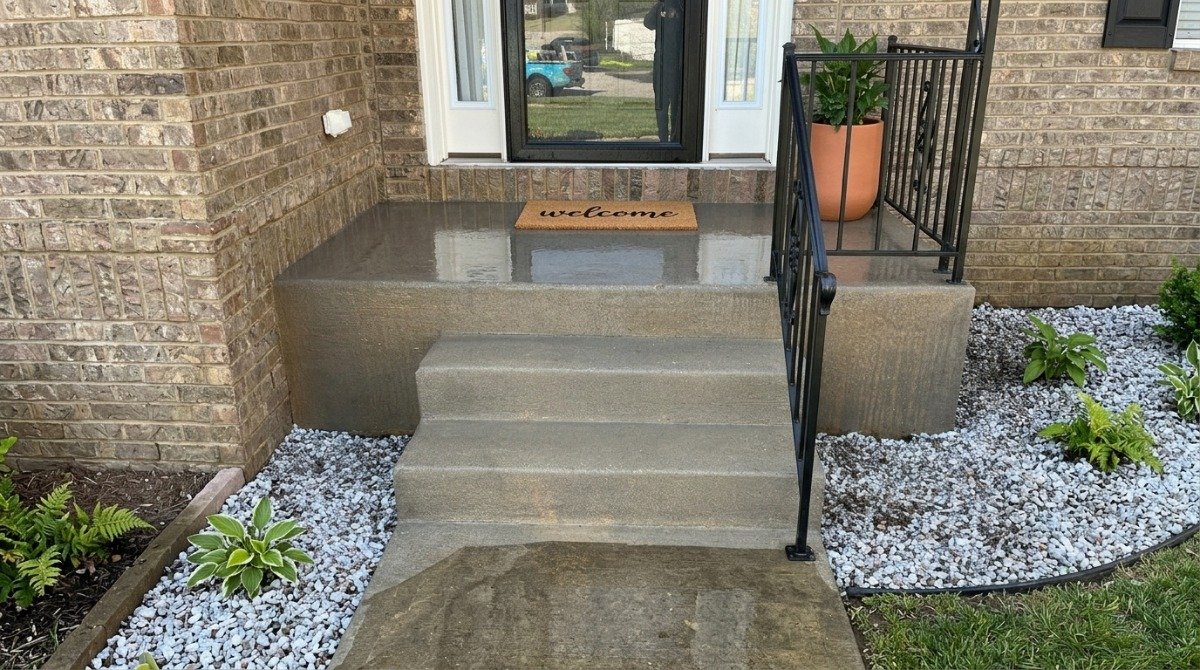
| Concrete driveway and walks | Every 1 to 2 years | Green in shade, winter salt film | Pressure washing with a surface cleaner |
| Pavers and pool deck | Yearly, at pool opening | Algae in joints, slick spots | Suitable pressure, joint sand check |
| Fences, vinyl and wood | Every 1 to 2 years | Green on shaded runs | Soft wash or low pressure |
Siding: why 12 to 18 months is the usual sweet spot
National guides tend to say once a year. Around here, shaded walls usually land at the short end, while sunny, open walls can often go longer.
Signs your siding is due:
- A green film you can see from the street
- Gray or black specks under the eaves
- A pollen haze that does not rinse off with a hose
- Dark bands along the bottom few courses
Washing often is not what damages siding. High pressure is. Proper house washing uses low pressure with a cleaning solution, so a sensible cycle protects the siding.
Roofs: clean when the streaks return, not on a fixed calendar
The Asphalt Roofing Manufacturers Association notes that algae cleaning on shingles is only temporary and the discoloration may recur. It also warns against power washing asphalt roofing.
How fast streaks return depends on shade, roof face and shingle type, so I time roof cleaning to the roof, not the calendar. Cleaning before lichen and moss take hold is easier on the shingles. If yours came back fast, this piece on black streaks that returned within a year covers the usual reasons.
Decks, patios and pool decks
Spring is the natural time for deck and patio cleaning, after the pollen drops and before summer use. Wash wood decks before any resealing. Clean composite and PVC by the manufacturer’s guidance, with low pressure.
For pool deck cleaning, pool opening is the easy moment to remember.
Gutters, driveways and fences
Gutters do best with a spring and fall visit, more often under overhanging trees. Our gutter cleaning covers the cleanout and the outside face, where pollen and streaks collect.
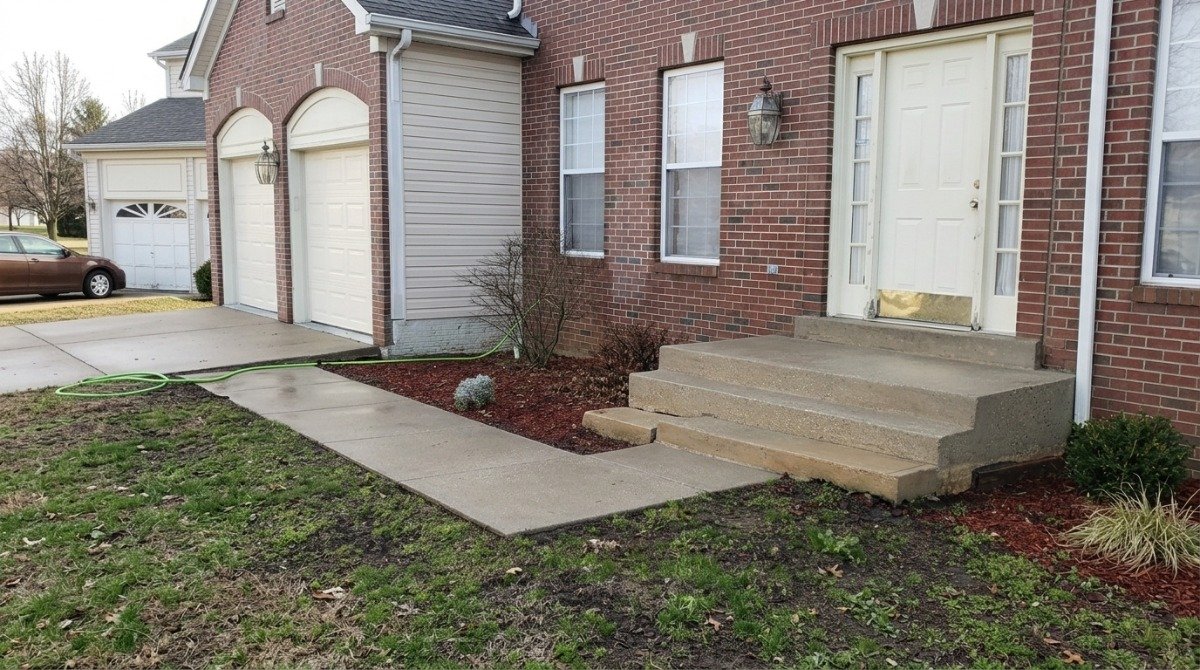
On driveways and walks, shade and winter salt film set the timing. Pressure washing is fine on concrete when done with the right tip and a surface cleaner. Fence cleaning follows the shade, and the run along the tree line turns first.
The best time of year to book in Central Connecticut
Our main window runs from late spring, after the pollen drops, through early fall. Mild days work best.
Washing stops once freezing nights arrive, because water and solution need to run off and dry. In my experience late spring fills up first, so it helps to call a little ahead.
How to stretch the time between washes
- Keep gutters clear so water does not spill down the siding
- Trim limbs off the roof and back from the walls
- Turn sprinklers so they do not hit the siding
- Rinse pollen off decks and patio furniture with a garden hose
- Sweep leaves off the deck before they sit through a wet week
Practical Example: How we set a washing cycle for one Central Connecticut home
What came back first, and why
The back wall under the maples had a light green film again. The sunny front and side walls still looked fine. The deck had gone gray where the trees shaded it, and the front walk and garage door had that gray road film. The roof still looked clean.
Each one lined up with an inland factor. Shade and slow drying on the back wall. Morning dew on the deck. Winter traffic grime near the street.
The cycle we agreed on
We talked it through on the driveway. The back wall and deck would go on a yearly cycle. The sunny walls could wait for every other visit. The front walk and garage door would be done in spring, after salt season.
The roof did not need anything yet, so we agreed to check it each visit and clean it when streaks start to show. Bundling whatever is due into one visit saves the homeowner separate trips.
As I often say, “Newington homes cover a wide range of ages and building materials, and each surface calls for a slightly different approach.”
What the homeowner does in between
The homeowner keeps the gutters clear and rinses pollen off the deck furniture in late spring. They also had one low limb trimmed back from the back wall.
Since then, nothing builds up to the point of staining, and each visit is lighter work than the one before.
If you are not sure where your house falls on this schedule, we are glad to take a look and tell you honestly what needs doing now and what can wait. We are based on Dewey Ave in Newington and serve Hartford and the surrounding towns. First time house cleaning customers get 15 percent off. Call (860) 263-9031.
Washing schedules across Hartford and the towns we serve
Newington, Wethersfield and Rocky Hill neighborhoods
Many homes here have mature trees and vinyl siding, so shaded sides usually need the yearly cycle. Our page on house washing in Newington, CT covers how we approach local homes. Rocky Hill, Wethersfield and Cromwell sit close to the river, where valley air tends to hold moisture on calm mornings.
Wooded towns west and east of Hartford
Avon, Farmington, Simsbury, Glastonbury and Portland have larger wooded lots. That usually means more roof and deck growth and more gutter visits. In Hartford itself, busy streets add traffic grime, and soft washing in Hartford handles both without high pressure on the siding.
Condo associations and commercial properties
Associations in Hartford, Wethersfield, Rocky Hill, Glastonbury, Farmington and Middletown often wash buildings in rotation, with shaded rear elevations on the shorter cycle. We are happy to walk the property with a manager to help set a cycle and budget. Our commercial exterior cleaning page has more.
FAQ
How often should I wash my house in Connecticut?
For most Central Connecticut homes, every 12 to 18 months for the siding, with shaded walls yearly. Sunny, open walls can often go longer. Trees, a nearby busy road and how the house faces all move that number.
Is once a year too often to wash a house?
No, as long as it is a soft wash matched to the surface. Damage comes from high pressure, not from a regular cycle. A yearly soft wash on shaded walls keeps growth light, so each cleaning is gentler.
Do coastal homes need more washing because of salt air?
They need more fresh water rinsing for salt film and corrosion, especially on metal, windows and fixtures. They usually need algae washing less often, because sun and the sea breeze dry surfaces faster. Wooded shoreline lots are the exception.
How often should a roof be soft washed?
In Central Connecticut, usually every 2 to 4 years, when the streaks start to return. The roofing industry notes that algae cleaning is temporary and may recur. Shingles should never be pressure washed.
How often should I clean my deck?
Yearly in spring works for most decks around Hartford, ideally before any resealing. Wood decks get a low pressure wash and then a suitable sealer. Composite and PVC follow the manufacturer’s guidance, with low pressure.
What is the best month to wash a house in Central Connecticut?
Late spring, once the heaviest pollen has dropped, through early fall. Washing stops once freezing nights arrive, because water and cleaning solution need to run off and dry.
Why does my house get green faster than my friend’s at the shore?
Inland homes get hotter days, cooler nights, wetter mornings, calmer air, and usually more trees and pollen. That keeps surfaces damp longer. If a neighbor’s house still looks cleaner, this article on the real reason may help.
Do you offer a recurring maintenance schedule?
Many customers simply book their next visit when we finish, or ask us to remind them when the house is likely due. We look at every surface each visit and tell you what can wait. You can get in touch with us to set up a return visit.
A schedule built for your house
Every house around Hartford ages a little differently, but the inland pattern is the same: more heat, more dew, more trees and more pollen than the shoreline. That is why frequent house washing makes sense here, on a cycle that fits each surface.
If you would like a washing schedule built for your house, call Mr-Suds Power Washing PROs at (860) 263-9031. We are licensed, bonded and insured, rated 5.0 on Google, and we look at every surface before we wash it. The priority on every property is matching the right method to the right surface. First time house cleaning customers save 15 percent.