
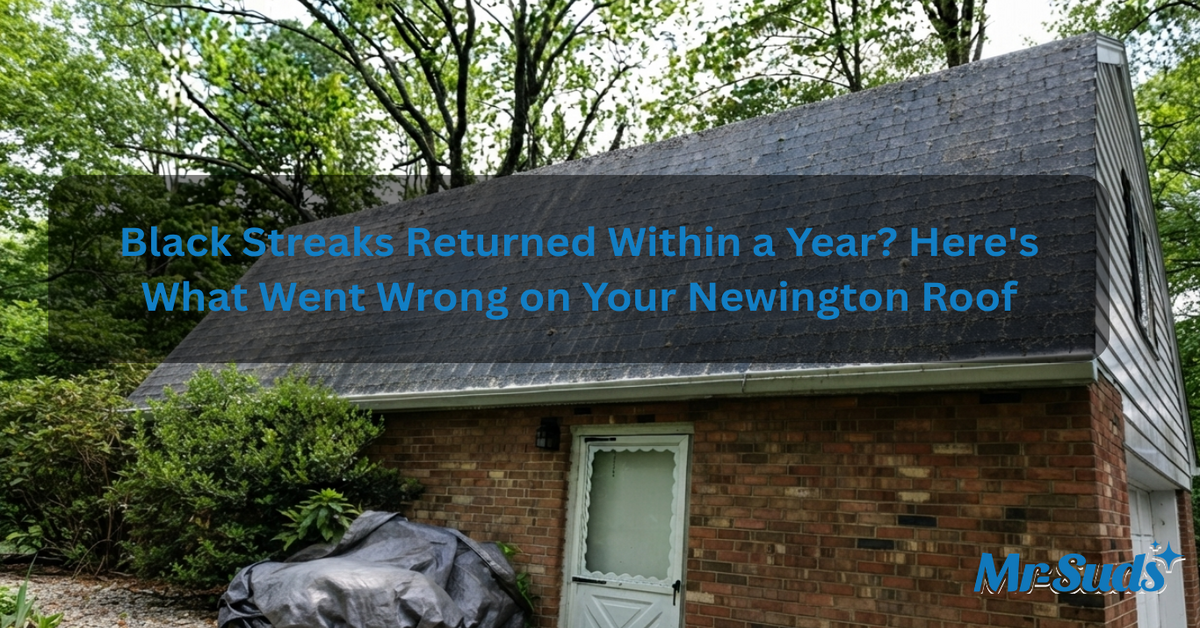
Black Streaks Returned Within a Year? Here’s What Went Wrong on Your Newington Roof
If you paid to have black streaks removed from your Newington roof and they are already back, something went wrong. A properly performed soft wash on a Central Connecticut roof should stay clean for three to five years, not eight months. Regrowth inside a year almost always traces back to one of five specific causes, and four of them sit squarely with the contractor.
I get this call several times every spring. The homeowner is polite, a little embarrassed, and mostly wants to know if they got taken. Below is exactly how we work through it on site, so you can run the same checks before you spend another dollar.
First, Is It Actually Algae Coming Back?
Not every dark streak on a roof is regrowth. I have driven out to Newington homes convinced they had an algae problem and walked away telling the owner their roof was simply wearing out. That is a different conversation, and no amount of washing changes it.
So before you call anyone, rule out the impostors.
The three things homeowners mistake for algae
Granule loss or asphalt bleed-through. These streaks follow the shingle courses in straight, tidy lines. The color reads grey-brown rather than black-green, and it never changes with the weather. That is the shingle mat showing through. Cleaning will not touch it.
Rust bleed. Orange-brown staining that starts at one point and fans downward usually comes from chimney flashing, a ridge vent, or an old satellite mount rusting quietly above it.
Tree tannin staining and shadowing. Under Newington’s mature oaks and maples this shows up as blotchy brown patches that come and go with the seasons.
The 60-second test
Do this from the driveway with your phone. No ladder.
Take a photo from the same spot as your pre-clean photo, same time of day.
Real Gloeocapsa magma regrowth shows as vertical dark streaks that start near the ridge and run down the slope. It feeds on the limestone filler in asphalt shingles and travels with rainwater, which is why it always runs downhill.
It appears on north-facing and shaded slopes first. A full-sun south slope is almost always the last to go.
If the streaks came back evenly on every slope including full sun, you are probably not looking at algae.
How Long Should a Roof Cleaning Actually Last in Central Connecticut?
A correct soft wash on a Hartford County roof should hold for three to five years. Heavy shade, a north-facing slope, or overhanging limbs can shorten that to two or three years. A rinse-only pressure wash typically fails within six to eighteen months. Regrowth in under twelve months is not normal and is not simply Connecticut humidity.
That last line matters. “It’s the humidity around here” is the most common explanation homeowners get, and it is almost never the real answer. Our summers are humid, sure. Wethersfield and Rocky Hill roofs live in the same air as Newington roofs, and the ones that were treated properly are still clean four seasons later.
You can see the difference plainly in our real Newington-area roof results.
The Five Reasons Streaks Come Back This Fast
This is the diagnostic list we run through on every second-opinion visit.
1. It was pressure-washed, not soft-washed
This is the most common cause by a wide margin.
High pressure blasts the visible colony off the surface. It does not kill what is embedded in the shingle mat. The roof looks spectacular on day one and re-colonises within a season, because the roots and spores never left.
Signs you had a pressure wash sold to you as a “roof cleaning”:
- Granules in your gutters or scattered across the driveway after the job
- A striped or streaky-clean appearance, lighter where the wand passed
- The crew walked the roof with a pressure wand instead of applying low-pressure solution from a ladder or the ground
- The whole job was finished in under an hour
ARMA and every major shingle manufacturer, including GAF, CertainTeed, Owens Corning and IKO, advise against pressure washing asphalt shingles. Doing it can also void your shingle warranty, which turns a cosmetic problem into an expensive one.
If you want the plain-English version of the difference, read what soft washing actually is.
2. The solution was too weak, or it never got time to work
Roof soft washing depends on sodium hypochlorite at the correct concentration, held on the surface long enough to kill the organism at the root. That holding period is what the trade calls dwell time.
Too weak, or rinsed off after two minutes, and you get bleaching instead of killing. The stain lightens. The colony survives.
Here is a tell most homeowners have never been told: a proper application keeps improving for seven to fourteen days after the crew drives away. If your roof looked its absolute best the moment they packed up and never got brighter after that, you were sold a bleaching job.
There is one more piece. Without a surfactant in the mix, the solution runs straight off a pitched roof before it can dwell. It is a small detail that decides whether the job lasts three years or nine months.
3. Your roof has conditions that reseed it fast
Some houses fight back harder. We see this constantly in Newington’s older neighbourhoods.
- Overhanging oak, maple and pine limbs across Elm Hill, Churchill Park, Newington Junction and Cedar Mountain
- North-facing slopes that never get enough direct sun to dry out
- Low-slope sections and dormer valleys that hold moisture, common on the 1950s and 60s ranches and capes that make up so much of Newington’s housing stock
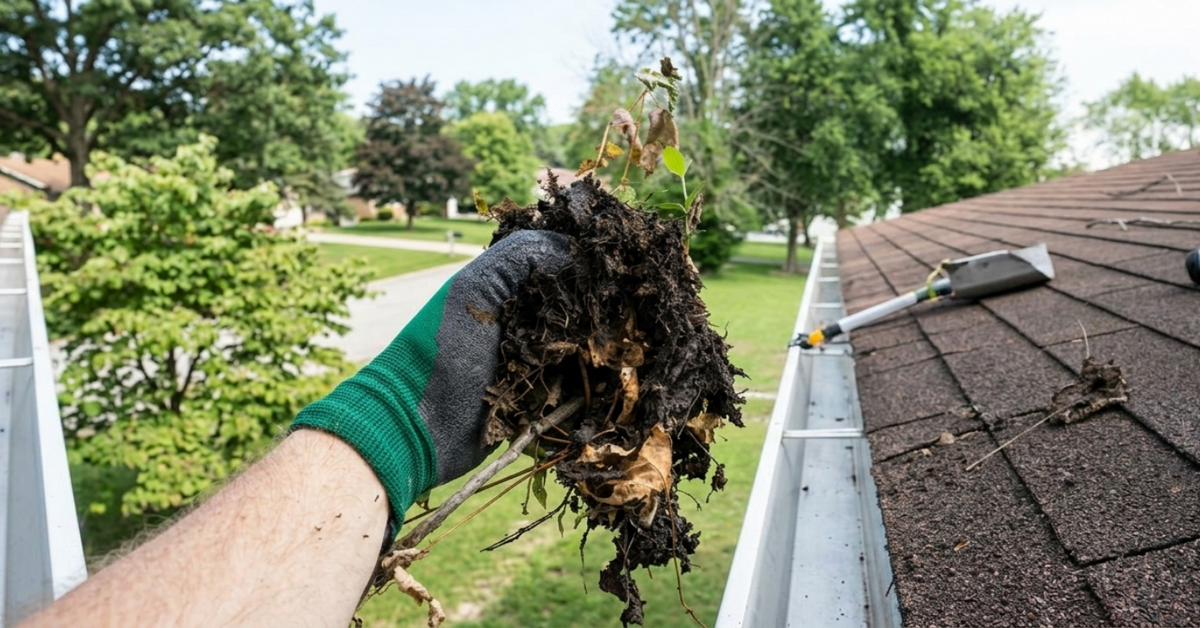
- Clogged gutters keeping the bottom three courses permanently damp
- Airborne spores from an untreated roof next door, which is exactly why streaks so often return first on the side facing the neighbour
Being straight with you: this cause is nobody’s fault. But a good contractor should have flagged it on the estimate and quoted prevention alongside the wash. If nobody mentioned your tree line, that was an oversight.
4. Your shingles lost their algae resistance
Algae-resistant shingles such as GAF StainGuard or CertainTeed StreakFighter use copper-bearing granules that leach out slowly and suppress growth. That protection depletes with age, usually somewhere around the ten to fifteen year mark.
Once it is gone, it is gone. On a roof past fifteen years, cleaning intervals shorten permanently and no contractor can change that.
If you want to compare notes with a roofer, ASTM D3274 is the industry rating scale for algae staining. Knowing the term is enough to get a straight answer out of anyone quoting you.
5. Nobody installed any prevention afterward
A wash removes the problem. It does not stop it from returning.
Prevention means zinc or copper strips at the ridge, limb clearance, and a light maintenance rinse on a schedule. Most one-and-done cleaners never bring these up, because they are not selling a system. They are selling a single wash and moving on.
Not sure which of these five happened to your roof? A free on-site inspection will tell you in about ten minutes. Call Roman at (860) 263-9031.
What to Do Right Now, Step by Step
This is the part worth screenshotting.
- Photograph it today. Same angles as your before-and-after photos, date-stamped. This is your evidence and it gets weaker every week you wait.
- Pull out the invoice and contract. Was the method described as soft wash or pressure wash? Is there a stated regrowth warranty, and how long is it? Under Connecticut’s Home Improvement Act (CGS Chapter 400), residential home improvement work must be under a written contract that includes the contractor’s HIC registration number.
- Verify the contractor is registered. Look up the HIC number at eLicense.ct.gov, the CT Department of Consumer Protection portal. No registration is a red flag for both quality and recourse.
- Ask for the application record in writing. A professional can tell you what product was applied, at what dilution, and what the dwell time was. Vagueness here answers your question for you.
- Give them a written chance to make it right. Email, not a phone call. Reference the warranty language and attach the photos. Most reputable contractors will re-treat rather than argue.
- If they ignore you, file a complaint with the CT Department of Consumer Protection. The Home Improvement Guaranty Fund exists specifically to reimburse homeowners who lose money when a registered contractor fails to perform. Small Claims Court in Connecticut handles claims up to $5,000. This is the process, not legal advice, so talk to DCP or an attorney about your specific situation.
- Get an independent second opinion before you pay anyone else. A contractor worth hiring will tell you honestly if it is granule loss rather than algae, because in that case washing solves nothing and you need a roofer.
What a Correct Re-Treatment Looks Like
Use this as your scorecard on the next quote you get.
| What to look for | Why it matters |
|---|---|
| Low-pressure application from ladder or ground | No unnecessary foot traffic on the shingle field |
| Correct concentration dialled to the surface | Kills the organism instead of bleaching the stain |
| Surfactant added for cling | Solution stays put on a pitch long enough to work |
| Full dwell before rinse | This is where the three-to-five-year result comes from |
| Landscaping pre-wet and covered | Your shrubs should not be collateral damage |
| Controlled runoff | Newington’s storm drains fall under the CT DEEP MS4 stormwater permit |
| Walkthrough with you before they leave | You approve the result, not the invoice |
One more question worth asking. Any company applying a biocide for hire in Connecticut operates under CT DEEP’s Pesticide Management Program, which requires pesticide business registration and certified applicators (CGS §22a-61(a) and §22a-66c(a)). Ask whoever is quoting you. The answer tells you a lot.
If you want to see how we approach it, here is our professional roof soft washing in Hartford and Newington.
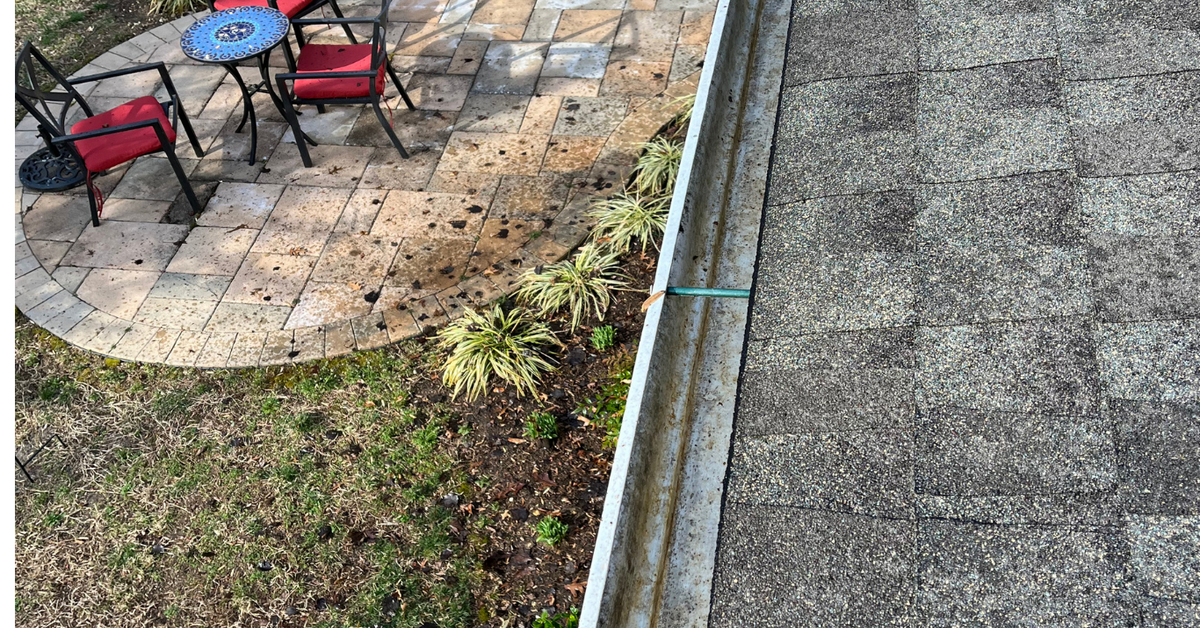
[Image 3: Soft wash application in progress. Alt: Low-pressure soft wash roof cleaning in Hartford County Connecticut]
How to Make the Next Clean Last Four to Five Years
- Zinc or copper ridge strips, which release metal ions with every rainfall
- Limb trimming back six to ten feet where the canopy allows
- Annual gutter cleaning, so the bottom courses actually dry out
- A light maintenance rinse at year two or three instead of waiting for a full re-clean
- Schedule cleans for late spring or early summer in Connecticut, when surfaces dry faster
- Keep every invoice and photo set, since it also supports roof warranty documentation later
What This Costs Around Newington
Real numbers, because vague answers here are how people get overcharged.
| Work | Typical Newington-area range |
|---|---|
| Roof soft wash, average ranch or cape | $400 to $900 |
| Larger colonials, multi-slope roofs | $900 to $1,400 |
| Zinc or copper ridge strip installation | $3 to $8 per linear foot |
Pitch, square footage, access and stain severity move those numbers. A steep multi-valley roof on a shaded lot is a different job from a single-slope ranch.
One thing to watch on the paperwork. In Connecticut, exterior housewashing and maintenance services on residential property are subject to 6.35% state sales tax (CT DRS classifies housewashing as a taxable maintenance service). A legitimate invoice shows that line. A cash quote with no tax on it tells you something about how the rest of that business is run.
Set against a roof replacement in Central CT, which runs many multiples of any figure above, keeping algae and moss off the shingles is the cheap end of the conversation.
FAQs
How long should roof cleaning last in Connecticut? Three to five years for a correct soft wash. Two to three years on heavily shaded or north-facing slopes.
Is it normal for black streaks to come back in under a year? No. In our experience it almost always points to pressure washing or an under-strength application without proper dwell time.
Will bleach damage my shingles? At correct dilution, with proper rinsing and landscape protection, no. Concentration and technique are what separate a safe job from a damaging one.
Does roof cleaning void my shingle warranty? Soft washing in line with manufacturer guidance does not. High-pressure washing can, which is one more reason to confirm the method in writing.
Can I clean the streaks myself? Wet asphalt on a pitched roof is genuinely dangerous, and we do not publish DIY roof instructions for that reason. Also worth knowing: in Connecticut, applying these products commercially requires DEEP pesticide business registration and certified applicators. There is landscaping and gutter risk too, which is usually what homeowners underestimate.
Do zinc strips really work? Yes, as suppression. They slow regrowth. They will not remove staining that is already there.
Should I just replace the roof instead? Only if the diagnosis is granule loss rather than algae. Run the 60-second test above, or have someone inspect it who is willing to tell you the truth either way.
Who do I complain to if the contractor won’t come back? The CT Department of Consumer Protection, the Home Improvement Guaranty Fund, and Small Claims Court for amounts up to $5,000.
Get a Straight Answer on Your Roof
Get a Second Opinion Before You Pay Anyone Else
Roman personally inspects every job. We will tell you honestly whether you are looking at algae regrowth or granule loss, even when the honest answer means we do not get the work. That has cost us jobs. It has also earned us most of the ones we keep.
Read what Central CT homeowners say, then get in touch.
Get a Free Quote or call (860) 263-9031