
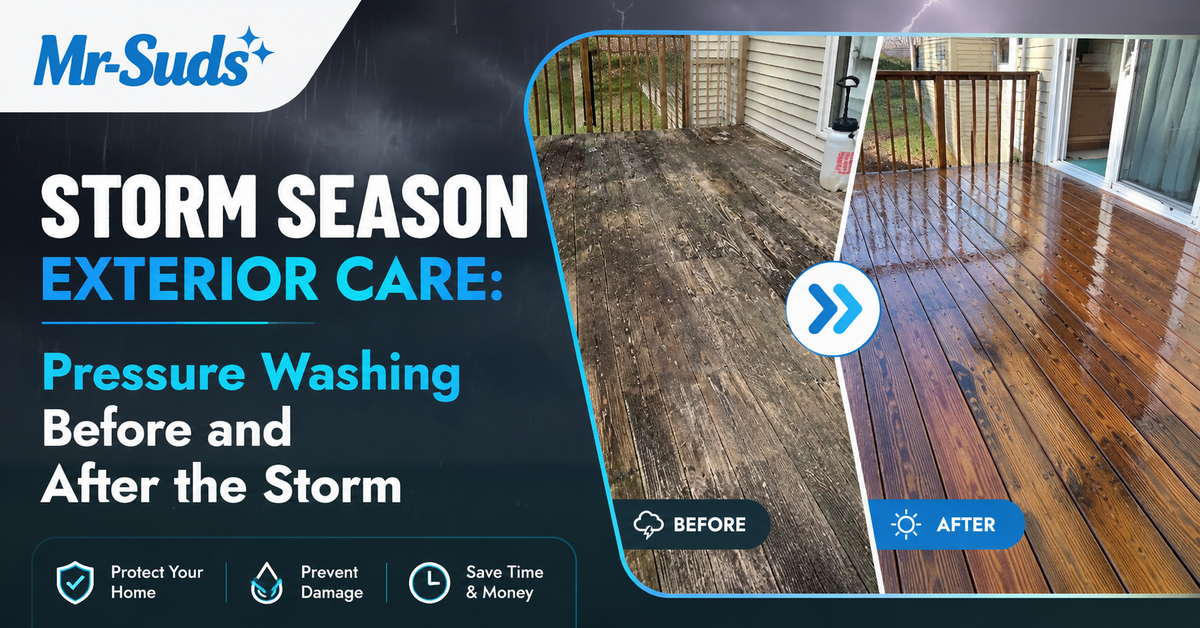
After a heavy summer thunderstorm tore through Newington last July, I got three calls before 10 a.m.
One homeowner had mud splashed two feet up their white vinyl siding from gutter overflow. Another had brown leaf stains ground into their concrete walkway from debris that the wind had plastered against the surface overnight. A third had a dark streak running from the foundation to the second story where a branch had scraped across their siding during the wind.
None of these were structural damage. All of them were exterior messes that could have been reduced with simple storm preparation, and all of them cleaned up quickly with professional help. But the homeowner with the leaf stains waited three weeks before calling, and by then the tannins had bonded into the concrete. What would have been a routine pressure wash turned into a chemical treatment job.
Connecticut gets hit by storms from every direction. Nor’easters, summer thunderstorms, tropical remnants, fall windstorms, and winter ice events. Each one leaves a different kind of mark on your home’s exterior.
Pressure washing before storm season removes debris, algae, and buildup that trap moisture and clog drainage, helping your home handle heavy rain and wind more effectively. After a storm, prompt pressure washing removes mud stains, leaf tannins, branch scrapes, and wind-driven debris before they bond to surfaces and cause permanent discoloration or damage.
This post covers what to do before storms arrive and what to do after they pass.

Why Storm Preparation Includes Exterior Cleaning
Most homeowners think of storm prep as clearing the yard, checking the sump pump, and maybe trimming a few branches. Exterior cleaning rarely makes the list. But it should, and here is why.
Clean Surfaces Handle Water Better Than Dirty Ones
A roof covered in algae and debris acts like a sponge. Instead of shedding water into the gutters efficiently, it absorbs and retains moisture, which increases the weight load on the structure during heavy rain.
A clean roof directs water into the gutter system the way it was designed to. That matters when three inches of rain falls in two hours during a July thunderstorm.
The same principle applies to siding. Algae and mold on the walls trap moisture against the surface. When storm-driven rain soaks the exterior further, the moisture load stacks on top of what was already there. Clean siding sheds water and dries faster after the storm passes.
Clean concrete driveways and walkways drain faster too. Biological film on concrete holds water on the surface, creating standing puddles that become slip hazards. A clean surface moves water toward the edges and into drainage paths.
Clean Gutters Are the First Line of Storm Defense
We see more storm-related siding stains from gutter overflow than from the storm itself. That is worth repeating because it surprises most homeowners.
Clogged gutters overflow during heavy rain, sending water cascading down the face of the siding. That water carries roof minerals, shingle grit, and organic material that stains everything it touches. It soaks the fascia boards. It pools against the foundation.
In severe storms, clogged gutters packed with wet leaves can detach from the fascia entirely under the weight. A single gutter cleaning before storm season prevents the most common storm-related exterior damage on Hartford County homes.
A $150 gutter cleaning before storm season prevents a $400 siding wash afterward. That is the math I share with every homeowner who asks.
Pre-Storm Cleaning Reveals Hidden Vulnerabilities
There is a secondary benefit to pre-storm exterior cleaning that most people do not think about. When we pressure wash or soft wash a house before storm season, we remove the dirt, mold, and debris that hides problems.
Loose siding panels. Cracked mortar joints. Damaged trim. Failing caulk around windows and door frames. These are all vulnerabilities that become significantly worse during a storm. Wind catches a loose panel and peels it back. Rain enters through cracked caulk and saturates the wall cavity.
The pre-storm wash acts as both a cleaning and an informal exterior inspection. We point out issues to homeowners on every job, and before storm season, those observations become especially valuable.
Connecticut’s Storm Season: What Hits and When
Connecticut is not a one-storm state. Different seasons bring different weather threats, and each one affects your exterior differently.
Spring (March to May): Late-Season Nor’easters and Heavy Rain
Late nor’easters can bring sustained high winds and heavy, prolonged rain that lasts for hours. Combined with spring snowmelt, ground saturation runs high, which increases the risk of foundation water intrusion.
Spring is also pollen season. Oak, birch, and pine pollen coat every exterior surface in a sticky yellow-green film. When storm rain hits a pollen-coated surface, it does not wash the pollen off. It drives it into the texture of the siding and concrete, creating streaky discoloration.
Pre-spring exterior cleaning removes winter residue and pollen film before storms grind it into your surfaces.
Summer (June to August): Thunderstorms and Tropical Remnants
June and July are Hartford County’s wettest months. Afternoon thunderstorms are routine, bringing intense, short-duration downpours with high winds and occasional hail.
Tropical storm remnants from Atlantic hurricanes that weaken as they track up the East Coast can bring 3 to 6 inches of rain in a 24-hour period along with sustained winds. These events are less frequent than regular thunderstorms but cause significantly more mess when they hit.
Summer storms are the primary cause of branch scrapes on siding, leaf and debris staining on walkways, and mud splash from overflowing gutters. The Newington calls I mentioned at the top of this post all came after a single July thunderstorm.
Fall (September to November): Windstorms and Leaf Debris
Fall windstorms drive leaves, small branches, and organic debris against the house and into every crevice, gutter, and corner. The sheer volume of leaves in Hartford County’s tree-heavy neighborhoods creates a recurring gutter clogging problem that lasts from October through December.
Wet leaves sitting on concrete walkways and driveways leave tannin stains. These are brown or orange discolorations that follow the shape of the leaf. If cleaned within a week or two, they come right off. If left for a month, they bond into the concrete and require chemical treatment.
Fall is the ideal window for a comprehensive exterior cleaning before the winter freeze-thaw season begins. A fall house wash combined with gutter cleaning addresses both storm preparation and winter surface protection in a single visit.
Winter (December to March): Ice Storms and Nor’easters
Ice storms coat surfaces in ice that can pull siding loose, bend gutters, and create ice dams on roofs that force water up under shingles. Heavy snow loads push debris into gutters and compact it.
Road salt from municipal plowing splashes onto driveways, walkways, and the lower three feet of siding along the street side of the house. Salt accelerates concrete deterioration and can discolor painted surfaces.
Winter is not a viable time for pressure washing in Connecticut due to freezing temperatures. But pre-winter cleaning and sealing protects surfaces through the cold months and reduces the damage you find in spring.
Your Before-the-Storm Exterior Checklist
Here is the preparation plan I recommend to every Hartford County homeowner before storm season.
1. Clean Gutters and Downspouts
Remove all leaf debris, shingle grit, and organic material from the gutter troughs. Flush downspouts with a hose to confirm they are flowing freely. Verify that downspouts direct water at least 4 to 5 feet away from the foundation, not alongside the house.
This single step prevents the majority of storm-related exterior staining and foundation water problems. It is the highest-impact action on this entire list.
2. Soft Wash the House Siding
Soft washing removes mold, algae, and pollen film that trap moisture against the siding during storms. Clean siding sheds water more effectively and dries faster after the storm passes.
The wash also reveals any loose panels, damaged trim, or caulk failures that should be repaired before wind and rain exploit them.
3. Pressure Wash Driveways and Walkways
Remove biological film that makes concrete surfaces dangerously slippery during and after rain. Clean concrete drains faster and is less likely to hold standing water that creates safety hazards.
Address any existing stains before storm debris adds new ones on top. A pressure washed driveway going into storm season is much easier to clean after the storm than one that already had layers of buildup.
4. Trim Trees and Landscaping Near the House
Cut back branches within 6 feet of the roof, siding, and gutters. Remove dead or dying branches that could break off in high winds and scrape or impact the exterior.
Trim shrubs away from the siding to improve airflow and reduce post-storm moisture retention on the wall surface.
5. Document Your Property’s Condition (Photo Walkthrough)
This is the step that takes 10 minutes and can save you thousands.
After your exterior is clean, walk the full perimeter and take dated photos of all four sides of the house, the roof (from ground level), the driveway, walkways, and steps. Save them in a folder on your phone labeled with the date.
These photos create a pre-storm baseline for insurance claims. If storm damage occurs, you can show the adjuster that your surfaces were clean and well-maintained before the event. This demonstrates that the damage is storm-related, not deferred maintenance.
It sounds simple because it is. But most homeowners do not do it, and the ones who do are in a much stronger position if they need to file a claim.
What to Do After the Storm: Inspection and Cleanup
Step 1: Safety First, Then Inspect
Wait until the storm has fully passed and conditions are genuinely safe before going outside. Check for downed power lines, hanging branches, and standing water before walking the property.
Do not attempt to pressure wash while there is still active runoff, standing water, or unstable debris on or near the house. Safety comes before cleanup.
Step 2: Walk the Property and Document Damage
Photograph any new damage you find. Broken or shifted siding panels. Dented or detached gutters. Cracked concrete. Displaced pavers. Branch scrapes on walls. Roof damage visible from ground level.
Note any new staining as well. Mud splash on the siding. Leaf tannin marks on concrete. Debris streaks on walkways. Compare your post-storm photos with the pre-storm documentation you took earlier, if you followed the checklist, for insurance purposes.
Step 3: Distinguish Between Storm Damage and Storm Mess
This is the distinction that saves homeowners money and frustration.
Storm damage needs a contractor. This includes broken or displaced siding, structural cracks in concrete, detached gutters, roof shingle loss, foundation cracking, or damaged window frames. These are repair jobs.
Storm mess needs pressure washing. This includes mud stains on siding, leaf and branch debris on walkways, organic staining on concrete, dirt splash on foundation walls, and gutters filled with storm debris. These are cleaning jobs.
Most of what homeowners find after a Connecticut storm is mess, not damage. A professional pressure washing crew can clean up storm mess in a few hours. Understanding the difference prevents unnecessary contractor calls and saves money.
Step 4: Clean Up Promptly (Timing Matters)
This is the part where procrastination costs real money.
Mud and organic debris stain surfaces more deeply the longer they sit. Leaf tannins on concrete can become permanent if left for more than 2 to 3 weeks. Branch sap on siding hardens in the sun within a few days and becomes much more difficult to remove. Gutter debris from the storm should be cleared before the next rain event to prevent repeated overflow.
After every major storm, we prioritize cleanup calls. Getting to the mess early means the stains come out easier, the job takes less time, and the results are better. Scheduling professional cleanup within 1 to 2 weeks of the storm gives the best outcome.
Step 5: Post-Storm Gutter Check
Storm winds and heavy rain can shift gutter alignment, loosen hangers, or fill gutters with a fresh load of debris. Even if you cleaned gutters before the storm, check them again after every significant weather event.
Clear any new debris and confirm that downspouts are still directing water away from the foundation. This takes 15 minutes on a ladder and prevents the overflow staining and foundation saturation problems that the next storm would bring.
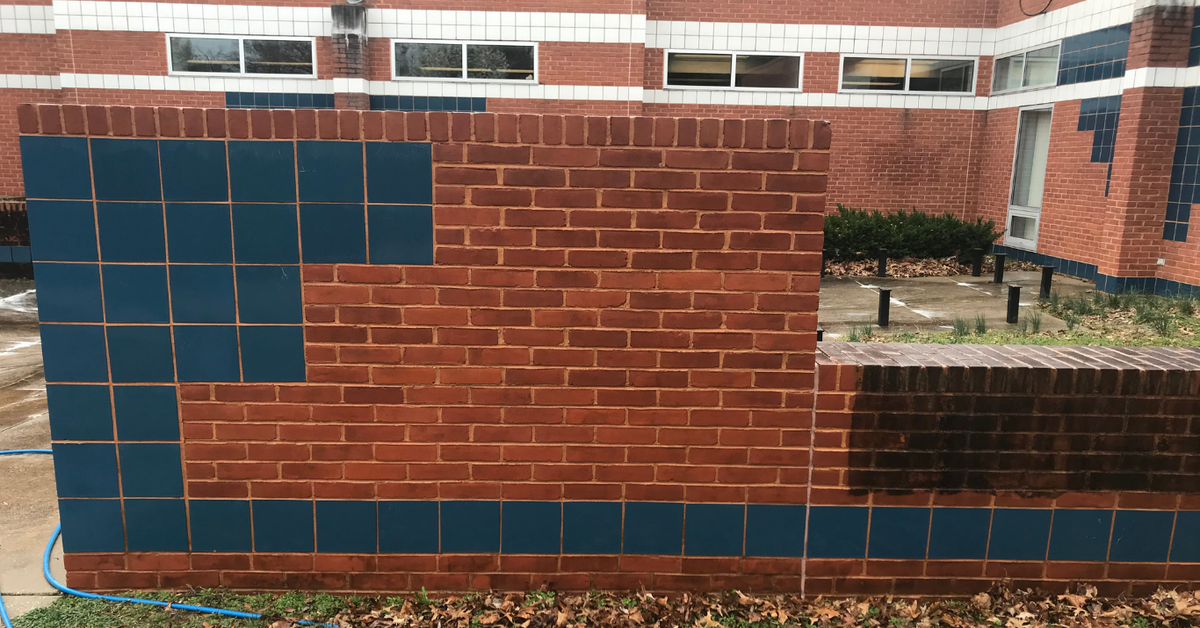
Common Storm Stains and How to Remove Them
Mud and Dirt Splash on Siding
Caused by gutter overflow, rain splash-back from saturated ground, or direct flood runoff in low-lying areas. Appears as brown or gray splatter on the lower sections of siding.
Soft washing with a mild cleaning solution removes mud stains effectively without damaging the siding. If left for more than a few weeks, mud particles can embed in the textured grooves of vinyl siding and require a stronger treatment to extract.
Leaf Tannin Stains on Concrete
Caused by wet leaves sitting on concrete walkways, driveways, or patios during and after storms. Appears as brown, orange, or rust-colored marks that mirror the shape of the leaf.
Pressure washing with a concrete cleaner removes most tannin stains if addressed within 2 to 3 weeks. Older stains that have had a month or more to bond may require oxalic acid treatment for full removal.
Branch Scrapes and Sap on Siding
Caused by wind-driven branches rubbing or scraping across the siding surface during high winds. Light scrapes leave surface marks that soft washing can remove. Deep scrapes that gouge or crack the vinyl require panel replacement.
Tree sap on siding should be addressed as soon as possible. Fresh sap can be removed with rubbing alcohol and a soft cloth. Once it hardens in the sun, it bonds to the surface and requires solvent-based treatment that is more time-consuming and costly.
Shingle Grit Staining on Walkways and Driveways
Heavy rain and wind can wash loose shingle granules off the roof, depositing dark grit and mineral streaks on concrete walkways and driveways below.
Standard pressure washing removes the grit without difficulty. However, if you notice large amounts of granules on your walkways, in your gutters, or at the base of your downspouts after a storm, that is a sign your roof may be losing material and should be inspected by a roofing professional.
Frequently Asked Questions
Should I pressure wash my house before a storm?
Yes. Pre-storm exterior cleaning removes moisture-trapping algae and buildup from siding, clears gutters for proper drainage, and reveals hidden vulnerabilities like loose panels or failing caulk that could worsen during high winds and heavy rain. A clean exterior handles storm water more efficiently and recovers faster after the event.
How soon after a storm should I clean my exterior?
Within 1 to 2 weeks for the best results. Mud, leaf tannins, sap, and organic debris bond to surfaces more deeply the longer they sit. Prompt cleanup prevents temporary stains from becoming permanent discoloration that requires more aggressive and expensive treatment.
Can storm debris cause permanent staining?
Yes. Leaf tannins on concrete, mud on textured vinyl siding, and tree sap on any surface can become permanent if left untreated for more than a few weeks. The combination of moisture, organic chemistry, and sun exposure accelerates the bonding process. Early cleanup is always easier and less expensive than late cleanup.
Should I clean my gutters before and after storms?
Yes, both. Pre-storm gutter cleaning ensures proper drainage during the event, preventing overflow that stains siding and saturates the foundation area. Post-storm gutter clearing removes new debris deposited by wind and rain before the next weather event arrives and causes the same overflow problem again.
What is the difference between storm damage and storm mess?
Storm damage involves broken, displaced, or structurally compromised materials like cracked siding, detached gutters, lost roof shingles, or foundation cracking. These need a contractor. Storm mess involves staining, debris, mud, and organic material on intact surfaces. These are cleaned with professional pressure washing. Most post-storm issues in Connecticut are mess, not damage.
Does pre-storm cleaning help with insurance claims?
Yes. Dated photos of clean, well-maintained exterior surfaces taken before a storm create a clear baseline for comparison. If storm damage occurs, these photos help demonstrate that the damage is storm-related and not pre-existing deferred maintenance. This can strengthen your position significantly when working with an insurance adjuster.
Be Ready Before It Hits. Clean Up Fast After It Passes.
Connecticut storms are not a question of “if” but “when.” Every season brings weather events that leave their mark on your home’s exterior. The difference between a homeowner who spends a few hundred on a quick cleanup and one who spends thousands on repairs often comes down to two things: preparation and timing.
Clean gutters before the storm. Clean surfaces before the storm. Take 10 minutes for a photo walkthrough. After the storm, clean up promptly before temporary mess becomes permanent damage.
Mr-Suds handles both sides of the equation. Pre-storm exterior cleaning to prepare your home, and post-storm cleanup to restore it.
Want to get your home storm-ready or need cleanup after a recent storm? Call us at (860) 263-9031 or request a free quote.