
Every spring, I get calls from homeowners across Newington, Wethersfield, and Rocky Hill asking about the same thing. “My driveway has new cracks that were not there last fall. My brick steps are flaking. The pavers on my walkway have shifted. What happened?”
The answer is almost always the same: the freeze-thaw cycle.
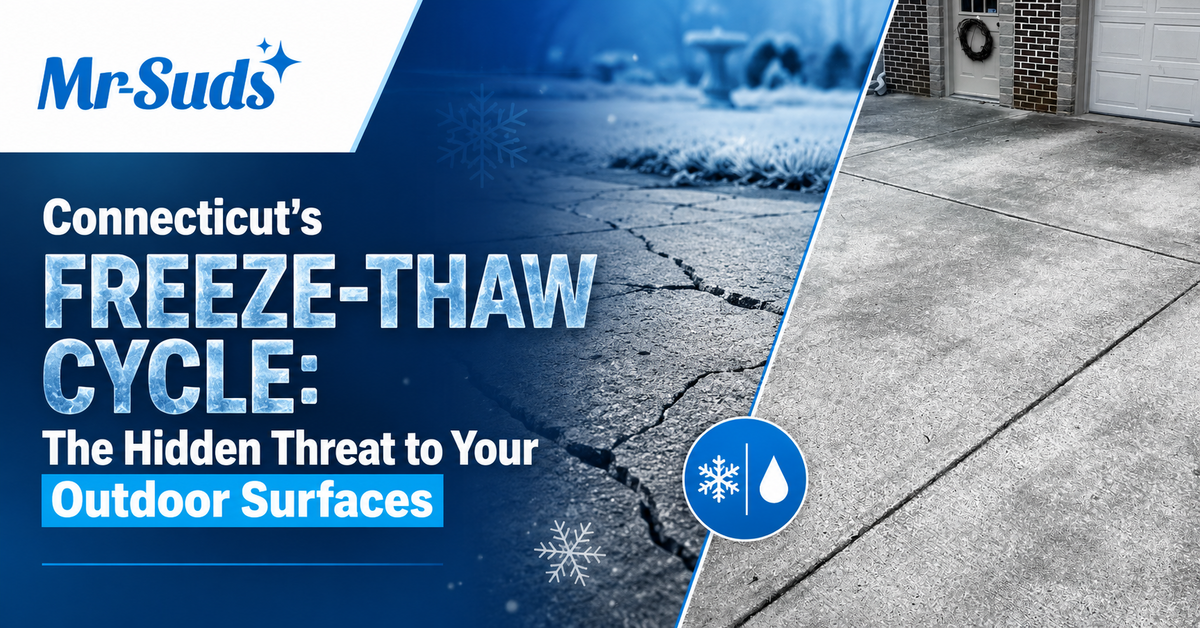
Connecticut’s winters are not just cold. They cycle between freezing and thawing dozens of times between November and March. Each cycle pushes water deeper into your concrete, brick, and stone. Each cycle makes the damage a little worse. And by the time spring arrives, surfaces that looked fine in October are cracking, flaking, and crumbling.
Here is the part that surprises most homeowners. One of the most effective ways to reduce freeze-thaw damage is something you can do every fall: have your outdoor surfaces professionally cleaned and, where appropriate, sealed. Mold, algae, and biological growth trap moisture against concrete, brick, and stone. That trapped moisture is exactly what freezes, expands, and breaks down surfaces from the inside out. Remove the growth before winter, and you remove a major source of the moisture that drives the damage.
Connecticut’s freeze-thaw cycle damages outdoor surfaces when water absorbed by porous materials like concrete, brick, and stone freezes and expands by approximately 9%, then contracts when it thaws. This repeated expansion and contraction causes cracking, spalling, mortar failure, and surface flaking. Professional exterior cleaning in fall removes mold, algae, and biological growth that trap moisture, reducing the water load in surfaces before winter and significantly slowing freeze-thaw deterioration.
What Is the Freeze-Thaw Cycle and How Does It Damage Your Property?
The Simple Science Behind the Damage
Water expands by approximately 9% when it freezes. That might not sound like much, but inside the pores of concrete, brick, or stone, that expansion generates internal pressure measured in thousands of PSI. Enough to crack materials that are designed to carry the weight of a house.
Concrete, brick, mortar, stone, and pavers are all porous. They absorb water through surface pores, through hairline cracks, and through capillary channels that pull moisture deeper into the material. When temperatures drop below 32 degrees Fahrenheit, the water inside those pores turns to ice and pushes outward against the walls of every pore and crack it occupies.
When temperatures rise above freezing, the ice melts. But the pore is now slightly larger than it was before. It absorbs a little more water the next time it rains or the snow melts. The next freeze pushes harder. The pore gets a little bigger again.
Each cycle makes the damage incrementally worse. It is cumulative, and it does not reverse itself. Once a crack opens, it only gets wider.
How Many Freeze-Thaw Cycles Does Connecticut Actually Get?
Hartford County typically experiences 80 to 100 or more freeze-thaw cycles per winter season. That is not 80 freezing nights. It is 80 or more transitions where the temperature crosses the 32-degree threshold in either direction.
Connecticut’s winter temperatures swing above and below freezing frequently within the same 24-hour period. A January day that hits 38 degrees by afternoon and drops to 25 degrees overnight counts as one cycle. A stretch of three days with daytime warming and nighttime freezing counts as three. These transitions can begin as early as November and continue through March.
This is what makes Connecticut’s climate more destructive than regions with consistently cold winters. In Minnesota or northern Vermont, surfaces freeze in December and stay frozen for weeks. That sustained cold is actually less damaging than Connecticut’s constant cycling because the water freezes once and stays frozen. Here, it freezes, thaws, refreezes, and rethaws dozens of times, and each transition does fresh damage.
The Types of Damage You See Every Spring
The damage shows up in predictable patterns depending on the material.
Cracking starts as hairline fractures that widen over multiple winters. It usually begins at joints, edges, and corners where concrete is thinnest.
Spalling is when the surface layer of concrete or brick flakes off, exposing rough aggregate underneath. It is most common on horizontal surfaces like driveways, walkways, and step treads where water pools and sits.
Scaling happens when thin sheets of the top concrete layer peel away, leaving a rough, pitted surface. Road salt accelerates this significantly.
Mortar joint failure shows up as crumbling, loosening, or missing mortar between bricks. Once the mortar goes, water flows directly into the wall, and the damage accelerates from there.
Paver shifting occurs when the sand between paver joints erodes from freeze-thaw movement. Pavers sink, tilt, or become uneven, creating trip hazards and pooling areas.
Pop-outs are small cone-shaped fragments that break away from a concrete surface when aggregate near the top freezes and expands. They leave small craters across driveways and walk
Which Outdoor Surfaces Are Most Vulnerable in Connecticut?
Not every surface on your property takes the same amount of punishment. Here is what I see most often on Hartford County homes, ranked by vulnerability.
Concrete Driveways and Walkways
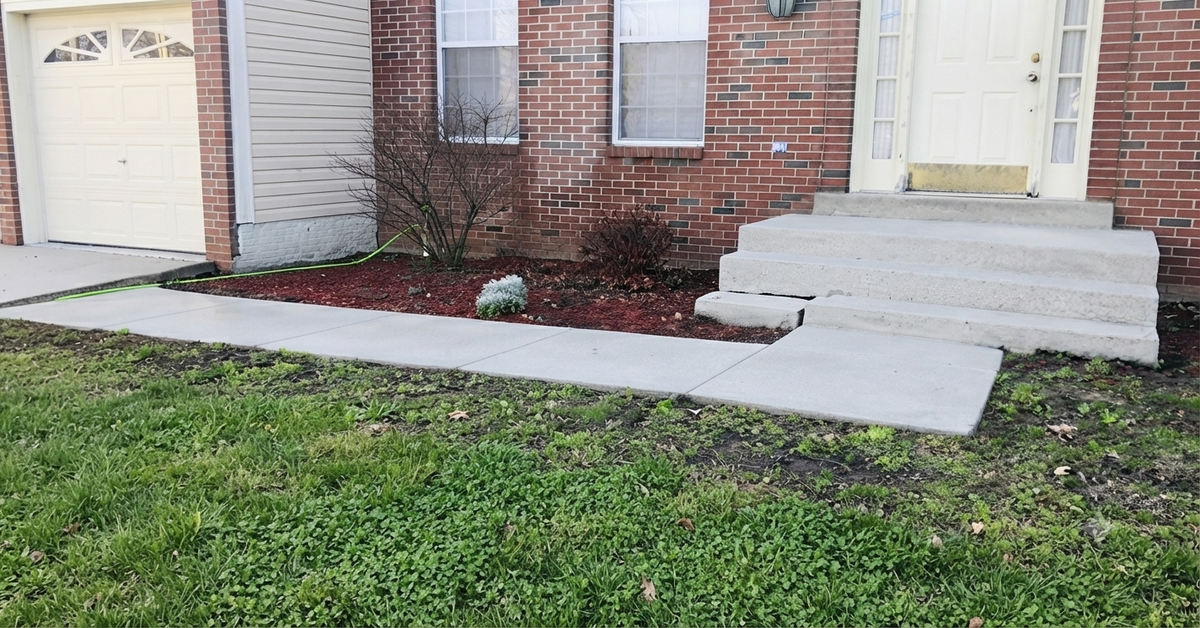
These are the most exposed surfaces on most properties. They sit flat, they collect standing water, and they take direct hits from rain, snow, snowmelt, and road salt.
Driveways that receive regular salt application experience accelerated damage because salt draws additional moisture into the concrete. Existing cracks from settling or age give water a direct path deeper into the slab, where the freeze-thaw forces are even more destructive.
Driveways and walkways that have not been cleaned and sealed going into winter are, on most properties, the first surfaces to show spring damage. I have seen driveways in Southington and Berlin where one winter of heavy salt use on an unsealed surface created scaling that would have taken three or four years on a sealed one.
Concrete and Brick Steps
Steps are structurally more vulnerable than flat slabs because they have edges and corners where the concrete is thinnest. Water pools on each tread surface, maximizing moisture contact with the material.
Risers and tread edges are the first places to show spalling and chipping. Brick steps with deteriorating mortar joints are especially at risk because the mortar absorbs water faster than the brick itself.
Brick and Stone Walls, Foundations, and Chimneys
Brick absorbs moisture through its pores. Mortar absorbs even more. Chimneys are exposed on all four sides to wind, rain, and temperature extremes, making them one of the most vulnerable masonry elements on any home.
Foundation walls near ground level face constant moisture from soil, snowmelt, and gutter runoff. When freeze-thaw damage hits foundation masonry, it often shows as cracking, spalling, or efflorescence, which is a white salt deposit that migrates to the surface as moisture moves through the material.
Paver Patios, Walkways, and Driveways
Pavers themselves are dense and relatively resistant. The weak point is the joints between them. Polymeric sand between paver joints erodes over winter as the freeze-thaw movement shifts the pavers and breaks down the sand binding.
Moss, algae, and organic debris sitting in those joints holds moisture through winter, increasing freeze-thaw stress on the joint system. Pavers that have not been cleaned and re-sanded before winter are significantly more likely to shift, sink, and become uneven by spring.
Wood and Composite Decks
Mold and algae growth on deck boards traps moisture against the wood grain. When that moisture freezes, it expands inside the wood fibers, causing cracking and splitting from the inside out.
Composite decking is more resistant than natural wood, but it can still warp and buckle if moisture gets trapped underneath biological growth and freezes repeatedly. Deck boards that carry moisture into winter are the ones most likely to need replacement in spring.
The Connection Between Exterior Cleaning and Freeze-Thaw Prevention
This is the part that no one talks about. Every article about freeze-thaw damage focuses on repair. Seal the concrete. Repoint the mortar. Replace the pavers. Those are all valid steps. But they skip the most affordable and accessible preventive measure a homeowner can take: cleaning the surfaces before winter.
Why Mold, Algae, and Biological Growth Make Freeze-Thaw Worse
Mold, algae, and biological films act like sponges on the surface of concrete, brick, and stone. They hold moisture against the material and prevent natural drying from sun and wind.
A concrete driveway coated in algae holds significantly more moisture entering winter than a clean driveway. That additional trapped moisture means more water freezing and expanding inside the pores. More ice crystals. More internal pressure. More damage per cycle.
I have seen the difference firsthand. Driveways that were cleaned and sealed in October look noticeably better the following spring than driveways on the same street that went into winter with a layer of algae and grime. The clean surface has less scaling, fewer new cracks, and holds up better overall. It is not a guarantee against all freeze-thaw damage, but the difference is visible and consistent.
How Fall Pressure Washing and Sealing Protects Your Surfaces
The protocol is straightforward. Clean, dry, seal.
Clean: Professional pressure washing or soft washing removes all mold, algae, dirt, and biological growth from concrete, brick, pavers, and stone.
Dry: Allow surfaces 24 to 48 hours of dry weather after cleaning before applying any sealer.
Seal: Apply a penetrating siloxane or silane-based sealer that repels liquid water while allowing water vapor to escape from inside the material. This distinction matters. A film-forming sealer traps moisture inside the concrete, which can actually make freeze-thaw damage worse. A penetrating sealer lets the material breathe while keeping new water out.
Clean, dry, and seal before the first freeze gives your surfaces the lowest possible moisture load going into winter. That is the best position you can put them in.
What Happens If You Skip Fall Cleaning
The consequences compound. Mold and algae continue trapping moisture on every surface through winter. Clogged gutters overflow during snowmelt, soaking siding, fascia, and foundation concrete with additional water that has nowhere to go.
Leaf debris on walkways and patios holds snowmelt against the surface longer than it would on a clean surface. Every exterior surface enters winter at maximum moisture absorption. That means maximum freeze-thaw damage.
Over 3 to 5 winters of skipped cleaning, the cumulative damage can push surfaces past the point where cleaning and sealing are enough. Concrete needs resurfacing. Brick needs repointing. Pavers need to be pulled up, re-graded, and re-set. All of those repairs cost significantly more than annual fall cleaning ever would have.
The Role of Road Salt and De-Icing Chemicals
How Salt Accelerates Freeze-Thaw Damage
Road salt is one of those things that solves one problem and creates another. Sodium chloride lowers the freezing point of water, which melts ice and provides traction. But it also increases the number of freeze-thaw cycles a surface experiences.
Here is why. Salt creates a brine solution on the concrete surface. That brine draws additional moisture into the concrete through osmosis, increasing the total water content inside the material. The brine freezes at a lower temperature than pure water, but it still freezes. And when it does, there is more water inside the concrete than there would have been without the salt.
Concrete that is regularly salted throughout winter shows scaling and spalling significantly faster than unsalted concrete. The Portland Cement Association has documented this effect extensively. The first winter of heavy salt use on unsealed concrete often produces visible surface damage.
Safer Alternatives for Connecticut Driveways and Walkways
Sand or fine gravel provides traction on ice without any chemical interaction with the concrete. It does not prevent ice from forming, but it makes walking safer and does zero damage to the surface.
Calcium magnesium acetate (CMA) is a less corrosive alternative to sodium chloride. It is more expensive but significantly gentler on concrete and safer for vegetation and pets.
Potassium chloride is another option, though it becomes less effective below 20 degrees Fahrenheit.
The best defense remains a sealed surface that resists moisture penetration in the first place. When concrete cannot absorb the brine, salt does far less damage. Sealing does not eliminate the need for winter traction measures, but it dramatically reduces the surface damage those measures cause.
Your Fall Action Plan: Protecting Outdoor Surfaces Before Connecticut’s First Freeze
Timing: When to Clean and Seal in Hartford County
The ideal window is late September through early November. You want to schedule at least 2 to 3 weeks before the first hard freeze, which typically arrives in Hartford County around mid to late November.
Cleaning requires 24 to 48 hours of dry weather afterward so the surface can fully dry before sealer application. The sealer itself needs an additional 24 to 48 hours of above-freezing temperatures to cure properly.
Scheduling in early October gives you the best margin for weather flexibility. By early November, you are competing with shorter days, colder temperatures, and a tighter window before the ground freezes.
The Fall Exterior Cleaning Checklist for Freeze-Thaw Protection
This is the action plan I recommend to every Hartford County homeowner who wants to minimize spring damage.
- Pressure wash driveway and walkways. Remove all algae, biological film, dirt, and salt residue left over from last winter.
- Soft wash house siding. Remove mold and algae that trap moisture against the home’s exterior before winter keeps those surfaces damp for months.
- Clean concrete and brick steps. Clear biological growth from treads, risers, and mortar joints. These are structurally the most vulnerable surfaces to freeze-thaw.
- Clean gutters. Remove leaf debris to prevent overflow that soaks siding, fascia, and foundation concrete during winter storms and snowmelt.
- Clean paver patios and walkways. Remove moss, algae, and debris from joints. Re-sand with polymeric sand after cleaning to stabilize joints before winter.
- Seal concrete and brick. Apply a penetrating siloxane or silane sealer to driveways, walkways, steps, and any exposed brick or stone.
- Inspect for existing damage. Walk the property and note any cracks, mortar gaps, or spalling that should be repaired before sealing and before winter makes them worse.
When we do fall cleaning jobs, I always walk the property with the homeowner afterward and point out any cracks or mortar gaps that need attention. It is better to fill a hairline crack in October than to watch it become a major fracture by March.
What Professional Fall Cleaning Costs vs. What Spring Repairs Cost
| Prevention (Fall) | Estimated Cost |
| Fall cleaning and sealing package (typical home) | $600 to $1,500 |
| Repair (Spring) | Estimated Cost |
| Concrete driveway resurfacing | $1,500 to $3,000+ |
| Brick repointing (mortar repair) | $1,000 to $5,000+ |
| Paver re-installation (lift, re-grade, re-set) | $1,500 to $4,000+ |
| Concrete step replacement | $1,000 to $3,000+ |
Prevention costs a fraction of repair. A $600 fall cleaning and sealing investment can prevent thousands of dollars in spring damage that accumulates over just 2 to 3 winters of neglect.
Frequently Asked Questions
What is the freeze-thaw cycle?
The freeze-thaw cycle occurs when water absorbed by porous materials like concrete, brick, or stone freezes and expands by approximately 9%, then thaws and contracts. In Connecticut, this cycle repeats 80 to 100 or more times per winter season, causing cumulative damage including cracking, spalling, mortar joint failure, and surface scaling. Each cycle makes the pores slightly larger, which holds more water for the next freeze.
Does pressure washing help prevent freeze-thaw damage?
Yes. Professional pressure washing removes mold, algae, and biological growth that trap moisture against outdoor surfaces. Removing this growth before winter reduces the amount of water available to freeze inside the pores and cracks of concrete, brick, and stone. Clean surfaces hold less moisture going into winter, which means less damage per cycle.
Should I seal my concrete after pressure washing?
Yes, especially in Connecticut. A penetrating siloxane or silane-based sealer repels liquid water while allowing moisture vapor to escape from inside the material. Sealing after fall cleaning gives surfaces the lowest possible moisture load entering winter and significantly reduces freeze-thaw deterioration. Avoid film-forming sealers on outdoor surfaces, as they can trap moisture and make the problem worse.
Does road salt damage concrete?
Yes. Road salt draws additional moisture into concrete through osmosis and effectively increases the number of freeze-thaw cycles the surface experiences. Sealed concrete resists salt damage better because the sealer reduces moisture penetration. For safer alternatives, consider sand for traction, calcium magnesium acetate (CMA), or potassium chloride, though none are as effective as sealing the surface first.
When is the best time to clean and seal outdoor surfaces in Connecticut?
Late September through early November is the ideal window. This allows enough time for cleaning, drying (24 to 48 hours), sealer application, and curing (another 24 to 48 hours) before Hartford County’s first hard freeze, which typically arrives around mid to late November. Scheduling in early October provides the best flexibility for weather delays.
Can I reverse freeze-thaw damage that has already occurred?
Minor surface scaling can sometimes be resurfaced. Hairline cracks can be filled with concrete caulk or patching compound and then sealed. However, deep spalling, structural cracking, and mortar joint failure require professional masonry repair or replacement. The key is prevention through annual cleaning and sealing, which slows the cycle before damage reaches the point of requiring costly repair.
Protect Your Surfaces Before Winter Does the Damage
Connecticut’s freeze-thaw cycle is not going to stop. Every winter, your driveway, steps, brick, pavers, and deck will go through dozens of freeze-thaw events. The question is not whether damage will occur. It is how fast.
Homeowners who clean and seal their outdoor surfaces before winter see significantly less cracking, flaking, and spalling in spring compared to those who skip it. Fall exterior cleaning is not just about making things look good for the holidays. It is one of the most effective and affordable forms of winter surface protection available to a Connecticut homeowner.
Want to protect your outdoor surfaces before this winter? Call Mr-Suds at (860) 263-9031 or request a free quote. We handle fall cleaning across Hartford County and can advise on sealing for maximum freeze-thaw protection.