
Last summer, a homeowner in Wethersfield rented a pressure washer to clean their front entry steps before a family gathering. They grabbed the narrow red-tip nozzle because it seemed like the most powerful option. More pressure means cleaner, right?
By the time they finished, two tread edges were chipped. Visible etch lines ran across the surface where the nozzle had lingered. The steps looked worse than when they started. They called us asking if the damage could be fixed.
I have seen this exact situation dozens of times across Hartford County. Concrete steps are one of the most common surfaces homeowners damage with pressure washers. The reason is simple. Steps have edges, corners, vertical faces, and thin structural points that flat driveways do not. The same technique that works perfectly on a flat concrete slab can destroy a set of steps in minutes.
To safely pressure wash concrete steps and walkways, use a gas-powered pressure washer set between 2,000 and 3,000 PSI with a 25-degree (green) nozzle. Keep the nozzle 8 to 12 inches from the surface. Work from the top step down. Avoid narrow nozzle tips (0 or 15 degrees) on edges and risers, as they concentrate force and cause chipping and etching. Pre-treat stains with a concrete cleaner before washing, and consider sealing the surface after cleaning to protect against future staining and freeze-thaw damage.
This post covers exactly how to pressure wash concrete steps and walkways safely, whether you are doing it yourself or hiring a professional.
Why Concrete Steps Are Harder to Pressure Wash Than Flat Surfaces
The Edge and Corner Problem Most Homeowners Do Not Think About
A flat driveway is forgiving. There are no edges to worry about, no corners to navigate, no thin structural points to damage. You can sweep the wand back and forth in a steady pattern and get consistent results.
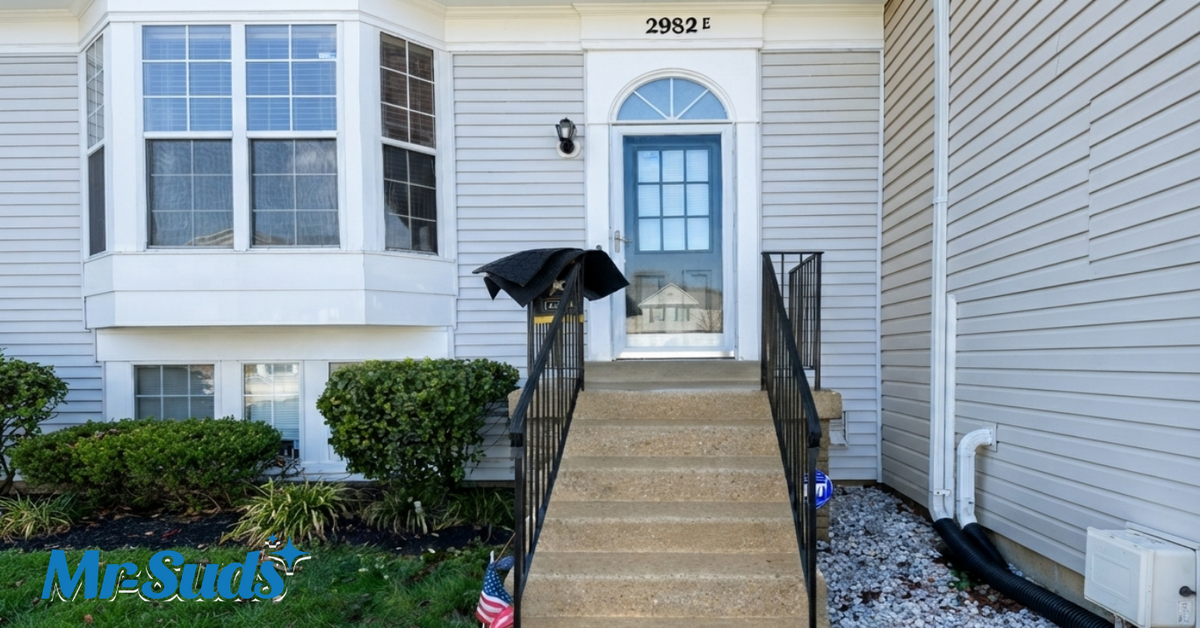
Steps are different. Every step has tread edges, riser corners, and nosing lips where the concrete is at its thinnest and structurally weakest. A pressure washer nozzle aimed directly at a step edge can chip the concrete instantly, especially on older poured steps or pre-cast units that have decades of wear.
We see chipped step edges at least once a month from homeowners who aimed the pressure washer directly at the edge instead of away from it. The fix is simple in concept but easy to forget in the moment: always angle the spray away from edges, directing force toward the center of the tread or riser surface. Never point the stream directly into an edge or corner.
Vertical Risers Require a Different Technique Than Horizontal Treads
Most pressure washing guides assume you are working on a flat, horizontal surface. Step risers are vertical. That changes everything about how the water hits the material.
On a vertical surface, the nozzle distance creates a different angle of impact. If you hold the wand the same distance as you would on a flat driveway and point it straight at the riser face, the concentrated stream can gouge or etch the surface. The correct technique is to spray risers from above at a downward angle, roughly 45 degrees, not straight-on at 90 degrees.
The most common mistake I see is homeowners using the same nozzle and distance on steps that they used on their flat driveway. Steps are not driveways. Professionals clean treads and risers separately, adjusting angle and distance for each surface.
Water Pooling on Steps Creates a Safety Hazard
Flat driveways shed water naturally. It runs toward the edges and drains. Step treads trap water on each level. During and after pressure washing, that pooled water is a genuine slip-and-fall risk.
This matters especially for older homeowners or anyone using the steps while the work is in progress. Directing the spray pattern to push water off each tread toward the front edge reduces pooling. Professionals clear each step as they work downward, making sure no standing water accumulates behind them.
The Right Equipment and Settings for Concrete Steps and Walkways
What PSI Is Safe for Concrete?
Not all concrete cleaning jobs need the same pressure. Here is a practical PSI guide based on what you are trying to remove.
| Cleaning Task | Recommended PSI |
| Light cleaning (dust, surface dirt) | 1,500 to 2,000 |
| Standard cleaning (algae, mildew, moderate staining) | 2,000 to 3,000 |
| Heavy cleaning (oil, rust, embedded stains) | 3,000 to 3,500 (with caution) |
Never exceed 3,500 PSI on residential concrete. Higher pressure strips away the cement paste layer on the surface, exposing the aggregate underneath and creating a permanently rough, pitted texture that collects dirt faster than it did before.
Older concrete, anything over 10 years old, or concrete with existing cracks should stay at the lower end of the range, around 2,000 to 2,500 PSI. The Portland Cement Association notes that aging concrete loses surface density over time, making it more vulnerable to high-pressure damage.
Which Nozzle to Use (and Which to Avoid)
The nozzle controls how the pressure is distributed across the surface. Choosing the wrong one is the single fastest way to damage concrete steps.
25-degree (green) nozzle is the best choice for general concrete cleaning. It delivers enough force to remove algae, mildew, and grime while spreading the pressure across a safe area. This is the nozzle you will use for 80% of the job.
40-degree (white) nozzle is best for applying cleaning solutions and for the final rinse pass. It is also the right choice for edge work and older concrete where you want to reduce force without losing coverage.
15-degree (yellow) nozzle should only be used on stubborn stains in the center of a flat tread, never near edges and never on risers. It concentrates pressure enough to remove embedded stains but can cause etching if held too close or used on vulnerable areas.
0-degree (red) nozzle should never be used on concrete steps. It focuses all pressure into a single point. On contact with a step edge or riser, it will gouge, etch, or chip the concrete. This is the nozzle that ruined the Wethersfield homeowner’s steps.
Surface cleaner attachment is excellent for flat walkways and driveways, but it does not work on steps. Surface cleaners require a flat, uninterrupted surface to spin properly. They cannot navigate step edges, risers, or corners. Steps require a standard wand with the appropriate nozzle tip.
Gas vs. Electric: Which Is Better for Concrete Steps?
Gas pressure washers deliver consistent PSI and GPM (gallons per minute) at the levels needed for effective concrete cleaning. The combination of pressure and water volume is what actually cleans the surface, and gas units provide both.
Electric pressure washers are fine for rinsing patio furniture or hosing down a deck, but they often lack the power to remove embedded algae and staining from concrete pores. For steps specifically, a gas unit with adjustable pressure gives the operator control over force when switching between treads, risers, and edges.
If you are renting a machine for a DIY project, choose a gas unit rated at 2,500 to 3,000 PSI with at least 2.5 GPM. That combination gives you enough power for concrete without forcing you into the danger zone.
Step-by-Step Process for Safely Pressure Washing Concrete Steps
Step 1: Clear and Prep the Area
Remove everything from the steps and walkway. Planters, doormats, furniture, shoes. Anything sitting on the surface needs to go.
Sweep loose debris, leaves, and dirt with a broom. Cover nearby plants, flower beds, and landscaping with tarps or plastic sheeting. The cleaning solution and high-pressure runoff can damage vegetation if it hits plants directly.
Before you start the machine, walk the steps and look for existing cracks, chips, or loose sections of concrete. Pressure washing can worsen existing damage. If you find a cracked tread or a section where the concrete is already flaking, avoid that area or reduce pressure significantly.
Close all nearby windows and doors. Pressure washers throw a surprising amount of mist and water spray, and it will find any opening.
Step 2: Pre-Treat Stains and Heavy Buildup
This is the step most homeowners skip, and it is the step that makes the biggest difference in both results and safety.
Apply a concrete-specific cleaning solution to the entire surface before you ever touch the pressure washer trigger. For algae and mold, a bleach-based solution (roughly 1 cup of bleach per gallon of water) works well. For oil stains, use a degreaser designed for concrete. For rust stains, an oxalic acid-based cleaner is effective. Avoid muriatic acid on steps unless you have professional experience with it, because improper application can etch and discolor the surface.
Let the solution dwell for 10 to 15 minutes according to the product instructions. Do not let it dry on the surface. If it starts drying, mist it lightly with a garden hose to keep it active.
Pre-treating lets the chemistry do the heavy lifting. The cleaning solution breaks the bond between the stain and the concrete so the pressure washer just rinses it away. That means you need less pressure, which means less risk of damage.
Step 3: Wash From Top to Bottom
Start at the highest step and work your way down. Gravity is your friend. Water, debris, and cleaning solution flow downward, so you are always pushing dirty runoff away from the area you have already cleaned.
Clean each tread first with the 25-degree nozzle angled slightly downward, pushing water and debris off the front edge of the step. Then clean each riser from above, angling the spray downward at approximately 45 degrees. Never spray a riser straight-on.
Keep the nozzle 8 to 12 inches from the surface. Use slow, overlapping sweeping motions. Avoid stopping the spray in one spot, because that concentrated force creates “hot spots” that etch the concrete and leave visible marks.
On edges, increase your distance to 12 to 18 inches and switch to the 40-degree nozzle. Less force at greater distance protects the weakest structural points of the step.
Step 4: Rinse and Clear Standing Water
After washing, do a final rinse pass from top to bottom using the 40-degree nozzle. Push all rinse water off each tread to prevent pooling. Check corners and areas against walls where cleaning solution may have collected.
Allow 24 to 48 hours of drying time before heavy foot traffic. The concrete surface is clean but may be slightly more slippery than usual until it fully dries and the pores close up.
Step 5: Inspect and Seal (Optional but Recommended)
After the steps are completely dry, walk the surface and inspect for any chips, cracks, or damage that may have been hidden under the grime.
Consider applying a penetrating concrete sealer. Siloxane or silane-based sealers are the best choice for exterior steps because they penetrate into the concrete rather than forming a film on top. A film-forming sealer on steps can become slippery when wet, which defeats the purpose.
Sealing is especially important in Connecticut, where 100-plus freeze-thaw cycles per winter can open pores in freshly cleaned, unsealed concrete and accelerate spalling. A sealed surface repels water, resists algae regrowth, and is significantly easier to clean in subsequent years.
For surfaces that need deeper restoration after years of buildup, our rejuvenation service combines professional cleaning with surface restoration and sealing.
Common Mistakes Homeowners Make When Pressure Washing Steps
Using the Wrong Nozzle
This is the most frequent cause of concrete step damage. The 0-degree red tip and the 15-degree yellow tip concentrate force into a tiny area that step edges and risers cannot handle. Always start with a 25-degree or 40-degree nozzle and only narrow down if absolutely necessary for a specific stain in the center of a flat tread.
Holding the Nozzle Too Close
At 3 to 4 inches from the surface, even a moderate-PSI washer creates enough force to strip the cement paste layer and expose raw aggregate underneath. The result is a permanently rough, pitted surface that stains faster and is harder to clean next time.
The safe range for most concrete cleaning is 8 to 12 inches. On step edges, increase to 12 to 18 inches.
Spraying Directly at Edges and Corners
Directing the spray straight into a step edge or corner concentrates the impact at the thinnest, weakest point of the concrete. The result is chipping that cannot be repaired without patching or resurfacing.
Always spray away from edges. If an edge needs cleaning, use the 40-degree nozzle from a greater distance with a sweeping motion parallel to the edge, not perpendicular to it.
Skipping Pre-Treatment
Trying to remove oil, rust, or embedded algae with pressure alone forces you to use more force than the concrete can handle safely. The stain might come off, but the surface underneath gets damaged in the process.
Let the cleaner do the work. The pressure washer is the rinse step, not the scrubbing step. Pre-treatment breaks the bond between the stain and the surface so moderate pressure is enough to carry it away.
Pressure Washing New Concrete Too Soon
Fresh concrete that is less than one year old has not fully cured. The surface is significantly softer and more vulnerable to etching and damage from pressure washing.
Wait at least 12 months after pouring before pressure washing new concrete steps or walkways. For spot cleaning during the first year, a garden hose and a soft-bristle brush are the only safe options.
How Connecticut’s Climate Affects Concrete Step Care
The Freeze-Thaw Connection
Connecticut experiences roughly 100 or more freeze-thaw cycles between November and March. Here is why that matters for your concrete steps.
When water penetrates into the pores of concrete, it freezes and expands. When temperatures rise, it thaws and contracts. That expansion-contraction cycle repeats dozens of times every winter. Over multiple seasons, it causes spalling (surface flaking), cracking, and structural weakening.
Pressure washing removes the algae and biological growth that trap moisture against the surface. Clean concrete holds less water in its pores going into winter, which means less freeze-thaw damage. Sealing after washing adds a second layer of protection by making the surface actively repel water.
Think of annual cleaning and sealing as freeze-thaw prevention, not just cosmetic maintenance.
The Best Time to Pressure Wash Steps in Connecticut
Spring (April to May) is the ideal window. You clean off winter salt residue, sand, and early-season pollen before the warm months accelerate algae growth. The concrete has time to dry and accept a sealer before summer humidity sets in.
Fall (September to October) is the second-best option. Cleaning before winter begins removes the biological layer that traps moisture. Applying a sealer after fall cleaning provides maximum protection heading into the freeze-thaw season.
Summer works but has a drawback. Hot direct sun can dry cleaning solutions before they have adequate dwell time, reducing their effectiveness. Morning appointments help avoid this.
Winter is not recommended. Water on steps can freeze within hours and create dangerous ice hazards. Wait for spring.
Common Step Materials in Hartford County Homes
Not all steps are the same. The material determines the pressure, nozzle, and technique you should use.
Poured concrete is the most common step material in Hartford County. It handles standard pressure washing well at 2,000 to 3,000 PSI with a 25-degree nozzle.
Pre-cast concrete steps are factory-made units set into position. They often have thinner edges than poured steps and less structural density. Use lower pressure, around 2,000 to 2,500 PSI, and a wider nozzle.
Bluestone is common in older Wethersfield and Glastonbury properties. It is a natural stone that can be scratched or etched by high pressure. Stay at 1,500 to 2,000 PSI with a 40-degree nozzle.
Brick steps require attention to the mortar joints, which are the weakest point. High pressure can blast out joint sand or crumbling mortar. Use 1,500 to 2,000 PSI and keep the spray moving. Never direct the stream into a mortar joint.
Brownstone and sandstone are soft stones found on older Hartford homes. They are highly vulnerable to pressure damage. Professional soft washing is recommended rather than high-pressure cleaning.
When Should You Call a Professional Instead of DIY?
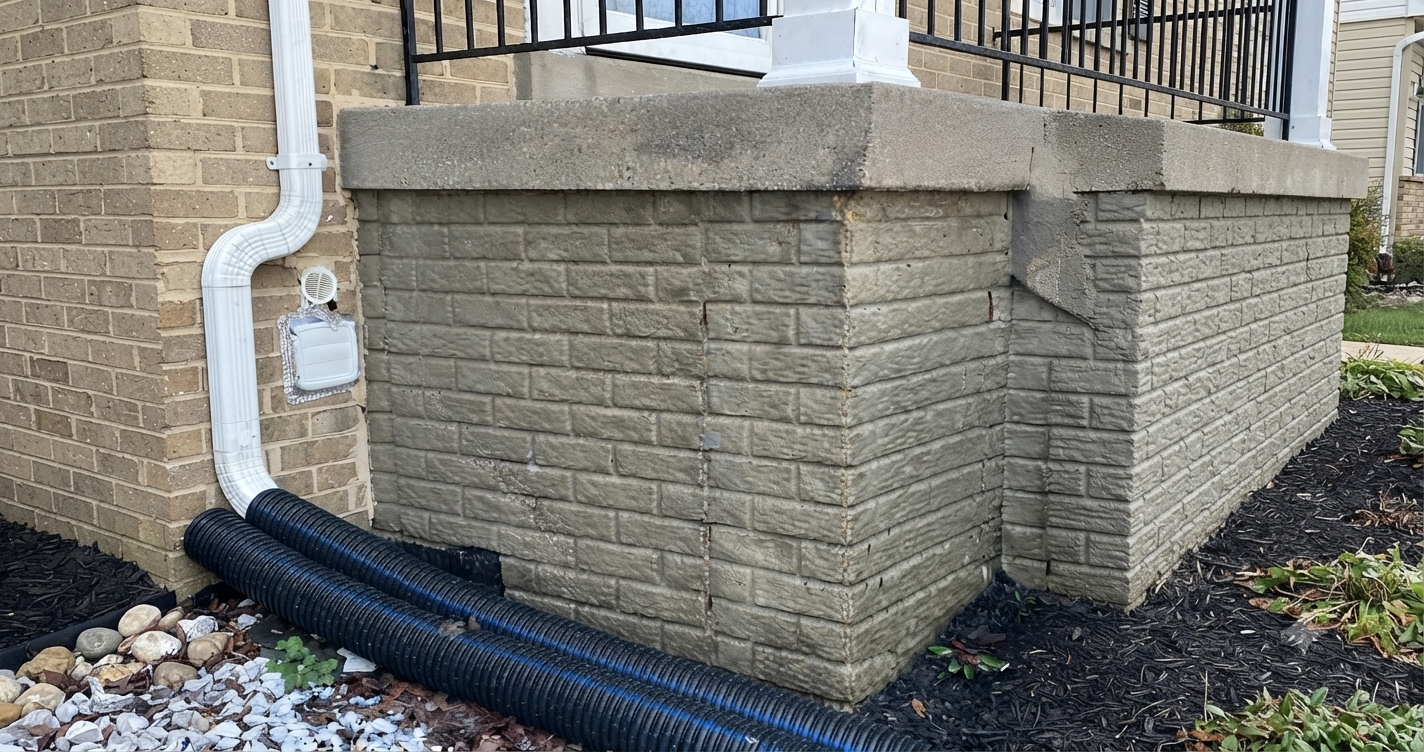
Concrete steps are one surface where DIY confidence needs to be weighed against the cost of getting it wrong. Front entry steps are the first thing visitors see. Damage is visible, hard to hide, and expensive to repair.
Five Signs You Should Hire a Pro for Your Steps
The concrete has visible cracks or structural damage that could worsen with pressure. The steps are made of natural stone like bluestone, brownstone, or flagstone that requires low-pressure expertise. The steps are at the front entry and highly visible, where DIY errors cannot be hidden.
The staining includes oil, rust, or deeply embedded biological growth that needs chemical pre-treatment beyond what consumer-grade products offer. Or you have never used a pressure washer before. Steps are one of the hardest surfaces to learn on because of the edges, corners, and vertical faces.
What a Professional Does Differently
A professional inspects for structural damage before starting. Cracks, loose sections, and spalling are identified so they can be avoided or addressed properly.
PSI, nozzle, and chemical treatment are selected based on the specific material and its current condition. Commercial-grade equipment with precise pressure control allows adjustments that most consumer-grade rental units cannot match.
The technique changes for every surface. Treads, risers, and edges are cleaned individually with the appropriate angle and distance. Standing water is cleared from each step during the process. Post-wash sealing is available for freeze-thaw protection.
And if anything goes wrong, a licensed, bonded, and insured company like Mr-Suds carries liability coverage. That is not something a rented pressure washer comes with.
Professional pressure washing for concrete steps and walkways in Hartford County typically costs $150 to $350, depending on total area and condition. Adding a concrete sealer after cleaning runs an additional $100 to $200 and significantly extends the life of the results.
For a surface you walk on every day and guests see every visit, that is a reasonable investment in both safety and appearance.
Frequently Asked Questions
What PSI should I use to pressure wash concrete steps?
For standard poured concrete steps, 2,000 to 3,000 PSI with a 25-degree nozzle is safe and effective. Older or damaged concrete should stay at the lower end, around 2,000 to 2,500 PSI. Pre-cast steps and natural stone like bluestone or brownstone require lower pressure, typically 1,500 to 2,000 PSI with a 40-degree nozzle.
Can pressure washing crack or damage concrete steps?
Yes, if the wrong nozzle, excessive pressure, or improper technique is used. The most common damage is etching, which appears as visible lines or rough spots from holding the nozzle too close or using a narrow tip. Step edges and corners are the most vulnerable points. Proper technique, including the right nozzle selection, distance, and spray angle, prevents this damage entirely.
Should I seal my concrete steps after pressure washing?
Yes, especially in Connecticut. A penetrating siloxane or silane sealer protects the freshly cleaned surface from moisture penetration, which reduces freeze-thaw damage over winter and slows algae regrowth. Fall cleaning followed by sealing provides the best preparation for Connecticut’s winter season.
How often should I pressure wash my walkway in Connecticut?
Most concrete walkways and steps benefit from cleaning once a year. Heavily shaded areas or walkways under significant tree cover may need cleaning every 8 to 12 months. Spring cleaning removes winter salt residue and sand. Fall cleaning prepares surfaces for the freeze-thaw season. Either timing works well depending on your schedule.
Can I use a surface cleaner attachment on concrete steps?
No. Surface cleaners require a flat, uninterrupted surface to spin and operate properly. They are excellent for driveways and flat walkway sections, but they cannot navigate step edges, risers, or corners. Steps need a standard wand with the appropriate nozzle tip, adjusted for each surface.
How much does professional concrete step and walkway cleaning cost?
Professional pressure washing for concrete steps and walkways in Hartford County typically costs $150 to $350, depending on total area and the severity of staining. Adding a penetrating concrete sealer after cleaning is an additional $100 to $200. Combined, the cleaning and sealing protect the surface through Connecticut’s winter and make future cleaning easier and less expensive.
Your Steps Deserve the Same Attention as Your Siding
Concrete steps and walkways are some of the most visible surfaces on your property. They are also some of the easiest to damage with the wrong pressure washing technique. The right PSI, the right nozzle, and a careful approach to edges and risers make the difference between steps that look restored and steps that look worse than before.
For homeowners comfortable with a pressure washer, this guide gives you what you need to do the job safely. For those who would rather have it done right the first time without the risk, professional cleaning removes the guesswork entirely.
Need your concrete steps and walkways cleaned before winter? Call Mr-Suds at (860) 263-9031 or request a free quote. We handle the pressure washing so you do not have to.