
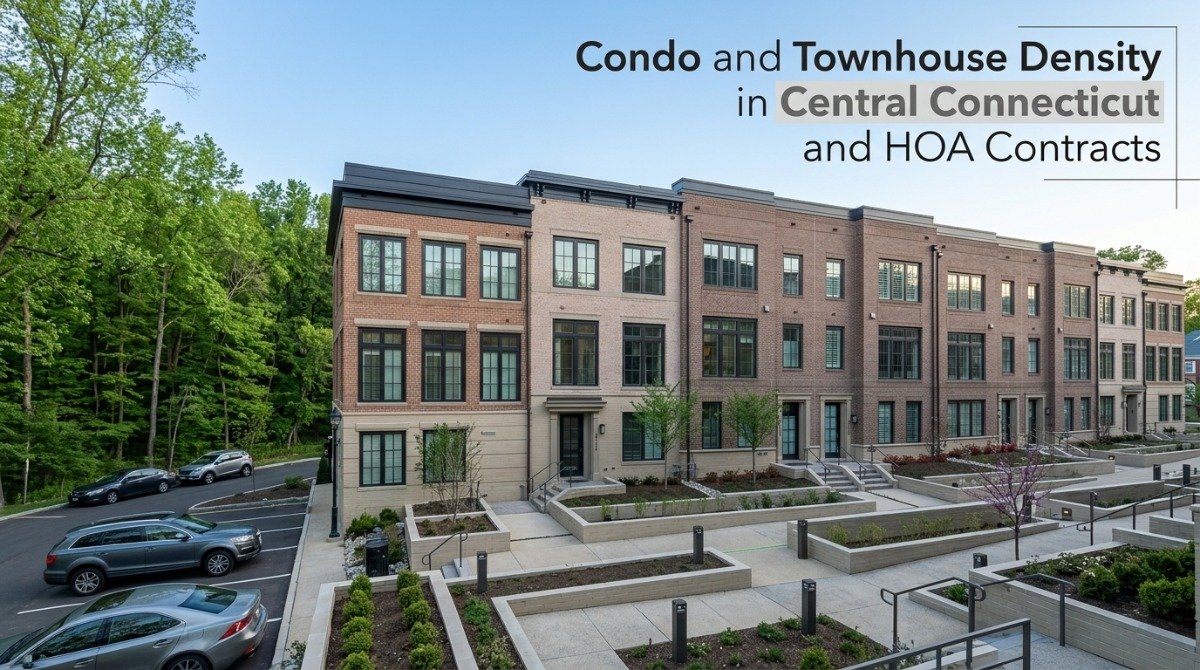
The property manager met us in the visitor lot with a site map and one question. “Can you price it per building and tell us what you need from residents?” It was a townhouse community a short drive from our Newington shop.
That question sits at the center of most HOA contracts for exterior work. Most of the trouble I see with an HOA pressure washing contract comes from what the bid package leaves out. This one did not say whether decks or gutters were included.
I’m Roman, owner of Mr-Suds Power Washing PROs. Below: how common condos and townhouses are around Hartford, what Connecticut law asks of boards, and a contract checklist you can use with any contractor.
What should an HOA pressure washing contract include?
An HOA pressure washing contract should list every building and surface in scope, the cleaning method for each, pricing per building or per square foot, insurance requirements with the association as certificate holder, a building schedule with rain dates, resident notice duties, damage reporting, payment terms and renewal terms.
As a checklist:
| Contract item | What to write in |
| Scope | Buildings, sides, siding, trim, roofs, gutters, walks, decks, fences |
| Method | Soft wash or pressure, stated for each surface |
| Price | Per building or per square foot, plus add on prices |
| Insurance | General liability, workers’ compensation, commercial auto; certificate naming the association |
| Schedule | Building order, working hours, rain dates |
| Notices | Who sends them, how far ahead, what residents need to do |
| Damage | Photos before work starts, a reporting window, a repair process |
| Water | Spigot access and a clause for local water use restrictions |
| Term | One season or multi year, with clear price adjustment rules |
How common are condos and townhouses in Hartford County and Central Connecticut?
The Census Bureau’s American Community Survey counts homes by building type, not by ownership. It has no “condo” box.
It does count “1 unit, attached,” which covers townhouses and rowhouses. That is the best public stand in for townhouse communities. Garden style condos sit inside the multi unit numbers, mixed in with apartments.
These figures are from the U.S. Census Bureau’s American Community Survey, 2019 to 2023 five year estimates.
| Place | Total housing units | 1 unit, attached | Share attached | Owner occupied (of occupied homes) |
| Newington | 13,577 | 2,152 | 15.8% | 78.2% |
| Cromwell | 5,968 | 943 | 15.8% | 82.4% |
| Rocky Hill | 9,512 | 1,198 | 12.6% | 68.4% |
| Farmington | 11,650 | 1,167 | 10.0% | 74.2% |
| Glastonbury | 12,591 | 1,155 | 9.2% | 83.5% |
| Wethersfield | 11,747 | 730 | 6.2% | 80.6% |
| Hartford (city) | 56,435 | 2,480 | 4.4% | 25.7% |
| Hartford County | 388,102 | 25,873 | 6.7% | 64.9% |
| Connecticut | 1,541,822 | 99,493 | 6.4% | 66.5% |
Newington and Cromwell stand out, at roughly two and a half times the state share. Rocky Hill, Farmington and Glastonbury also sit above average.
Hartford is different. Buildings with five or more units make up about 44.1 percent of the city’s housing, against about 21.1 percent countywide. Much of that is rental, not condo.
Why so many townhouse communities in these suburbs?
Condominium ownership spread across the United States in the 1960s. Section 234 of the Housing Act of 1961 allowed the Federal Housing Administration to insure condo mortgages, and every state had a condo law by 1969.
In Connecticut, the Common Interest Ownership Act governs communities created on or after January 1, 1984.
My own read, from working these towns for years: places like Newington filled up with single family homes early, and later building often went up as attached rows. That is an observation, not a statistic.
What Connecticut law says about HOA contracts for maintenance
This is not legal advice; your declaration, bylaws and attorney control. What follows is a plain language summary from a contractor who works inside these rules.
The Common Interest Ownership Act is Chapter 828 of the Connecticut General Statutes. It applies to common interest communities created on or after January 1, 1984. Several of the sections below, including association powers, open meetings, required insurance and budgets, also reach older communities for events after that date.
Can the board hire a washing contractor?
Yes. The CIOA section on association powers says the association, subject to its declaration, may hire and discharge managing agents, employees, agents and independent contractors.
The same section says it may make contracts and incur liabilities. It may also regulate the use, maintenance, repair, replacement and modification of common elements.
So hiring a washing contractor is squarely within an association’s powers, within whatever limits your documents set.
Who maintains what: common elements vs units
The CIOA section on upkeep sets a default. Unless the declaration says otherwise, the association is responsible for maintenance, repair and replacement of the common elements. Each unit owner is responsible for the same work on his or her own unit.
The declaration is what really decides it. In many townhouse communities the siding and roofs are common elements. Decks, patios and small private fences are often limited common elements, assigned to one unit.
That split is where bids go sideways. One contractor includes the decks, another leaves them out.
Contract tip: write into the scope whether limited common element decks, patios and private fences are included, excluded, or offered to owners at a set price. If owners want their patio or pool deck cleaning done on wash day, a fixed add on price keeps it simple.
What insurance does the association itself carry?
The CIOA section on insurance requires the association to carry, to the extent reasonably available, property insurance on the common elements and commercial general liability insurance. It also requires fidelity insurance, and flood insurance where a condominium sits in a flood hazard area.
That coverage is not meant to absorb a contractor’s mistakes. Require contractors to carry their own coverage and name the association on the certificate, so a contractor’s accident lands on the contractor’s policy.
Meetings, votes and conflicts of interest
Under the section on open board meetings, board meetings are open to unit owners. Notice goes out at least five days ahead with the time, date, place and agenda.
Owners get a reasonable opportunity to comment at each meeting. The board may move into executive session to review bids or proposals while a contract is still being negotiated, if early public knowledge would put the association at a disadvantage.
But no final vote can happen in executive session. The vote happens in the open meeting, and the minutes record how each board member voted unless the action passed by unanimous consent or without objection.
The section on the executive board adds a duty of loyalty. Members appointed by the developer owe the care and loyalty of a trustee, and all board members are subject to the conflict of interest rules that govern corporate directors and officers.
Contract tip: ask every bidder to disclose any relationship with a board member or the manager.
Budgets, special assessments and reserves
Under the CIOA budget section, the board adopts a proposed budget at least once a year. Within 30 days it sends owners a summary that includes reserves.
Owners can reject the budget only if a majority of all unit owners vote to reject it, or a larger number if the declaration says so. A special assessment that, together with others that year, stays within 15 percent of the last adopted budget takes effect without an owner vote, unless your documents say otherwise.
Connecticut requires reserve disclosure in that budget summary. It does not require a formal reserve study.
Contract tip: put routine washing in the operating budget as a recurring line, so it never becomes a surprise assessment.
If you are building a bid package, we are glad to walk the property with your manager or a board member and give you a written scope by building and surface, whether or not you hire us. Call Roman at (860) 263-9031.
How should a board bid out exterior washing?
The goal is a process that is simple, fair and easy to defend at the next meeting.
Write one scope for everyone
Every bidder should price the same job. Your bid package or request for proposal should include:
- A building list with a simple site map
- Surfaces per building: siding, trim, roofs, gutters, walks, curbs, fences, dumpster enclosures
- Number of stories and any access limits, like steep slopes or tight courtyards
- Water spigot locations and whether the association supplies water
- Parking rules for work trucks
- What is excluded, stated plainly
Ask for the method by surface
Soft washing belongs on vinyl siding, painted trim and roofs. Pressure belongs on concrete and hard surfaces.
A bidder who plans to blast vinyl siding or shingles is a red flag. The Asphalt Roofing Manufacturers Association advises against power washing asphalt roofs because high pressure can damage the shingles. Proper roof cleaning uses a cleaning solution and a gentle rinse instead.
As I tell every board, “The priority on every property is matching the right method to the right surface.”
Normalize the pricing
One bid comes in per unit, one per building, one by the hour. Ask every bidder for a per building price, a total base price, and unit prices for add ons like gutter cleaning, decks, walks and fence cleaning. Now they line up.
How many bids do you need?
CIOA does not set a number. Follow your association’s own procurement policy and past practice, and make sure every bidder priced the same scope.
Check the basics
Before you shortlist anyone, confirm:
- Connecticut business registration
- Current insurance certificates
- References from other associations or commercial properties
- Photos of similar buildings they have washed
Bid comparison template
Fill in the blank cells for each bidder at your bid review.
| Item | Bidder A | Bidder B | Bidder C |
| Method for siding | |||
| Method for roofs | |||
| Price per building | |||
| Total base price | |||
| Gutters add on | |||
| Insurance certificate received | |||
| Schedule and rain policy | |||
| References |
What insurance certificates should you ask for?
A certificate of insurance is a one page summary issued by the contractor’s insurance agent. It lists the policies, the limits and the policy dates.
It proves coverage exists on the day it was issued. It does not change the policy.
Ask for these coverages:
- General liability, with limits set by your manager’s or attorney’s standard
- Workers’ compensation, if the contractor has employees
- Commercial auto, for trucks and trailers on your property
Ask that the association, and the management company if you have one, be listed as certificate holder. If your documents or your attorney require it, ask to be named as additional insured as well.
Have the certificate sent directly from the agent, and put the expiration dates on the manager’s calendar.
If a contractor stalls on this, our post on what to do when a contractor cannot produce proof of insurance walks through the next steps.
Mr-Suds is licensed, bonded and insured, and our certificate of insurance is available on request.
How do you schedule washing across many buildings?
Go building by building, so each resident is affected for one day. Many crews start where shade and algae are worst, or follow parking zones.
A typical building runs in a set order. Set up hoses and protect plants, pre wet the landscaping, apply the soft wash solution, let it dwell, rinse thoroughly, then finish the walks. How many buildings fit in a day depends on height, access and how heavy the growth is, so ask each bidder for their own estimate in writing.
Name rain dates in the contract. Soft washing also needs limits on wind, because overspray drifts, and on cold temperatures in early spring and late fall.
State where the spigots are and who pays for water. Add a clause for what happens if outdoor water use is restricted.
Back at the townhouse community from the opening, we grouped buildings by parking area. A rainy morning pushed one group back a few days, but the contract already named rain dates, so the reschedule was one email.
What should resident notices say?
Many managers send notices about a week ahead, with a reminder the day before.
A good notice covers:
- Date and building number
- Time window for that building
- Close windows and doors
- Move cars away from building walls
- Bring in patio furniture, grills, plants and pet items
- Keep pets inside during the wash
- Who to contact with questions
Here is a short sample you can adapt:
Exterior washing for your building Our crew will wash your building on the date shown on this notice, between 8 a.m. and 4 p.m. Please close all windows and doors, move cars away from the building, and bring in patio furniture, grills, plants and pet items. Keep pets inside while we work. Questions? Contact your property manager. Thank you for your help.
Is a multi year washing contract worth it?
The upside:
- Budget certainty for the annual budget cycle
- Scheduling priority in a busy spring
- A consistent look across all buildings, instead of a patchwork from different years
- Faster response when a resident calls about a missed corner
The downside: you are locked in if quality slips. Protect the board with an annual performance review and a termination for cause clause.
For pricing, pick a fixed price for the term, a stated annual adjustment, or a yearly quote with a capped increase. Avoid “subject to change.” Our post on what to do when a final bill exceeds the quote shows why written terms matter.
Then choose a rotation: every building yearly, half the community each year, or siding yearly and roofs every few years. Shaded north walls usually show algae sooner, so hitting them more often is often the best value. Tie it to your annual budget adoption.
How a townhouse community wash came together
Here is the job from the opening, told as a composite of our townhouse work with details kept general.
The walk through and the scope
We walked every row with the property manager and a board member. Two story buildings, vinyl siding, painted trim, asphalt roofs, concrete walks.
The original bid package said “wash all buildings” and did not mention gutters, decks or walks. We wrote a scope naming every surface, the method for each, and the exclusions.
Decks were limited common elements under their declaration, so the board left them out of the base scope. Owners could add theirs at a set price.
Notices and the building order
The manager sent notices well ahead of the first wash day, and a reminder the day before each building. We grouped the buildings by parking area, so each resident moved a car once.
What happened on wash days
Most days went as planned. One morning a car was still parked tight against a wall, so we skipped that side, finished the rest of the building, and came back after the owner moved it.
Another day an upstairs window was open. We caught it on the walk around before applying any solution and waited until it was closed.
Then came the rain. We lost a morning, the next group moved to the named rain date, and residents got a short updated notice.
Final walk and what the board decided next
On the last day we did a final walk with the manager. One shaded corner on a north wall needed a touch up, and we handled it before leaving.
At the following meeting the board talked about adding gutters for the next season.
Association washing around Hartford, Newington and Central Connecticut
The towns with the highest attached housing share in the table, Newington, Cromwell, Rocky Hill, Farmington and Glastonbury, all sit inside our service area. So do Wethersfield and Hartford.
Condo buildings here share the same surfaces: vinyl siding, painted trim, asphalt roofs with algae streaks, and concrete walks. Some older complexes still have wood or aluminum siding.
Spring pollen and shaded courtyards mean many associations wash in spring, some with a fall pass on the worst sides. Our soft washing in Newington work follows that same seasonal pattern.
We are based at 130 Dewey Ave in Newington and serve 18 towns across Central Connecticut:
- Commercial exterior cleaning in Newington and Hartford
- Commercial exterior cleaning in Hartford
- Commercial exterior cleaning in Rocky Hill
- Commercial exterior cleaning in Wethersfield
- Commercial exterior cleaning in Middletown, close to the Cromwell communities
Frequently asked questions about HOA contracts for washing
How often should a condo association wash its buildings?
Most associations do well with a yearly siding wash on shaded buildings and roofs cleaned as algae streaks return. Sunny sides can often go longer. A contractor’s walk through should base the schedule on what is actually growing on each building.
How many bids does an HOA need in Connecticut?
The Common Interest Ownership Act does not set a number of bids. Follow your association’s own procurement policy and past practice. Whatever number you choose, make sure every bidder priced the same written scope.
Can the board sign a washing contract without an owner vote?
Generally yes. CIOA gives the association power to make contracts, subject to the declaration. The final vote must happen in an open board meeting, not in executive session. Check your declaration and bylaws for any added approval limits, and ask your attorney if unsure.
Who washes decks and patios in a Connecticut condo?
It depends on your declaration. By default, CIOA makes the association responsible for common elements and each owner responsible for his or her unit. Decks and patios are often limited common elements. Your contract should state whether they are included, excluded or offered as an add on.
What insurance should a pressure washing contractor have?
General liability, workers’ compensation if the contractor has employees, and commercial auto. The certificate should list the association, and any management company, as certificate holder, with additional insured status if your documents require it.
Is soft washing safe for vinyl siding and roofs?
Yes, when done properly. Soft washing uses low pressure, a cleaning solution and a thorough rinse, which suits vinyl siding, painted trim and roofs. ARMA warns against power washing asphalt shingles. A careful crew will also pre wet plants and rinse them after.
What should we tell residents before washing day?
Give the date, building and time window. Ask residents to close windows and doors, move cars away from walls, bring in patio items and keep pets inside. Include a contact for questions, and send a reminder the day before.
Should we sign a multi year contract?
It can be a good fit. A multi year contract gives budget certainty, scheduling priority and a consistent look across buildings. Protect the board with an annual review, a termination for cause clause and a clear price adjustment rule.
Planning your association’s next exterior wash?
If your board or management company is planning a spring or fall wash, we can walk the property, write up a scope by building and surface, and send our insurance certificate before you decide.
Mr-Suds Power Washing PROs is locally owned in Newington, licensed, bonded and insured, with a 5.0 Google rating on our reviews page.
Call Roman at (860) 263-9031, email roman@mr-suds.com, or reach us through our contact page. We are open Monday to Friday, 8 a.m. to 4 p.m., with weekends by appointment.