
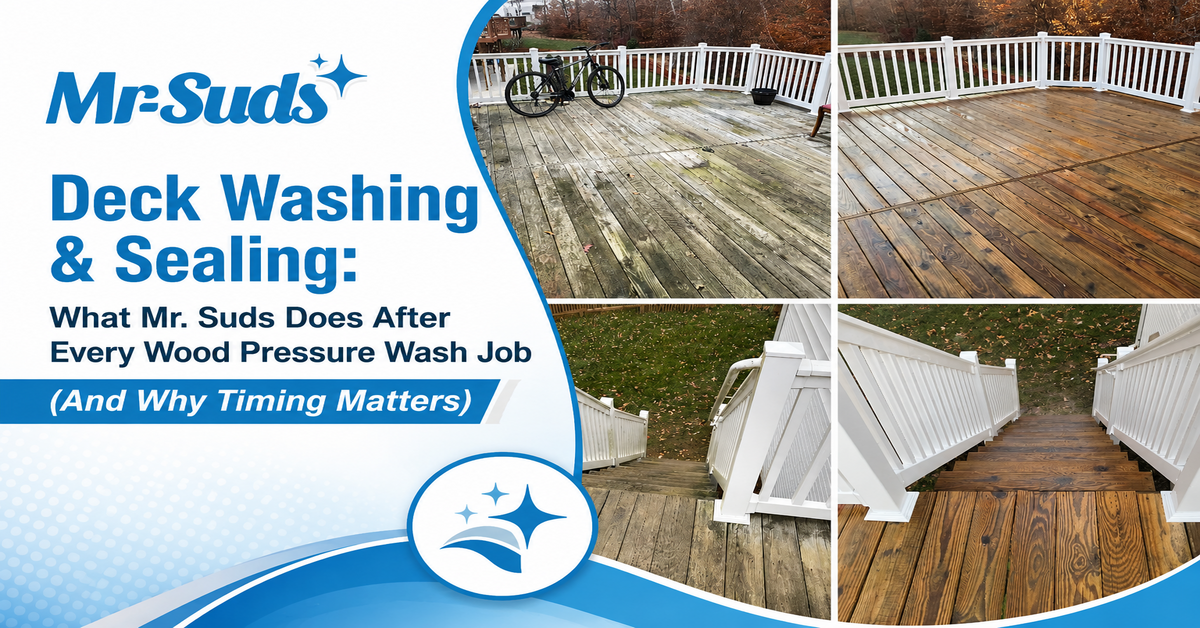
By Cory Cooper, Mr. Suds Residential Window Cleaning & Power Washing. Family owned, fully insured, serving Kingwood and the North Houston Metro area for over 20 years.
Here is a call we get almost every spring.
A homeowner washed their deck on Saturday. The wood looked great. So Sunday morning they cracked open a can of sealer and got to work. By the afternoon the finish had gone blotchy and patchy, and they had no idea why.
The answer is almost always the same. The wood was still soaked. In our Houston humidity, a deck that looks dry on the surface can still be wet deep in the grain.
After 20-plus years washing decks and fences around Kingwood, my wife Brooke and I have learned that cleaning is only half the job. The other half is timing. Seal too soon and you trap moisture. Wait too long and the gray creeps back in.
So this is the honest, field-tested version of how we handle a deck after every wood wash, and how you can get it right yourself.
Should You Seal Your Deck After Washing It?
Yes, you should. Washing strips away dirt, mildew, and the old worn finish, which leaves the wood clean but exposed. Sealing or staining right after is what locks out moisture and the sun, so the wood does not gray, crack, or rot. And yes, you always clean first. Seal over a dirty deck and you trap the grime underneath, so the finish fails fast.
Think of a fresh wash as opening up the wood. The pores are clean and ready to drink in protection. If you leave it bare, the same dirt, sun, and rain that aged it will go right back to work.
Why clean wood needs protection
Bare wood is thirsty. It soaks up rain, then dries out in the sun, over and over. That cycle is what causes warping, cracking, and that tired gray look.
A good sealer or stain slows all of that down. It keeps water out and shields the surface from UV.
Do you have to clean before sealing?
Always. Sealer cannot bond to dirt, mildew, or a flaking old coat. It needs clean, dry wood to grip.
We have seen plenty of decks that were sealed over a dusty surface. They looked fine for a month, then peeled. Skipping the wash never saves time in the long run.
Field note: One of the most common fixes we get called for is a deck that grayed again within a single season. Nearly every time, it was sealed without a proper cleaning first.
How Long Should You Wait to Seal a Deck After Power Washing?
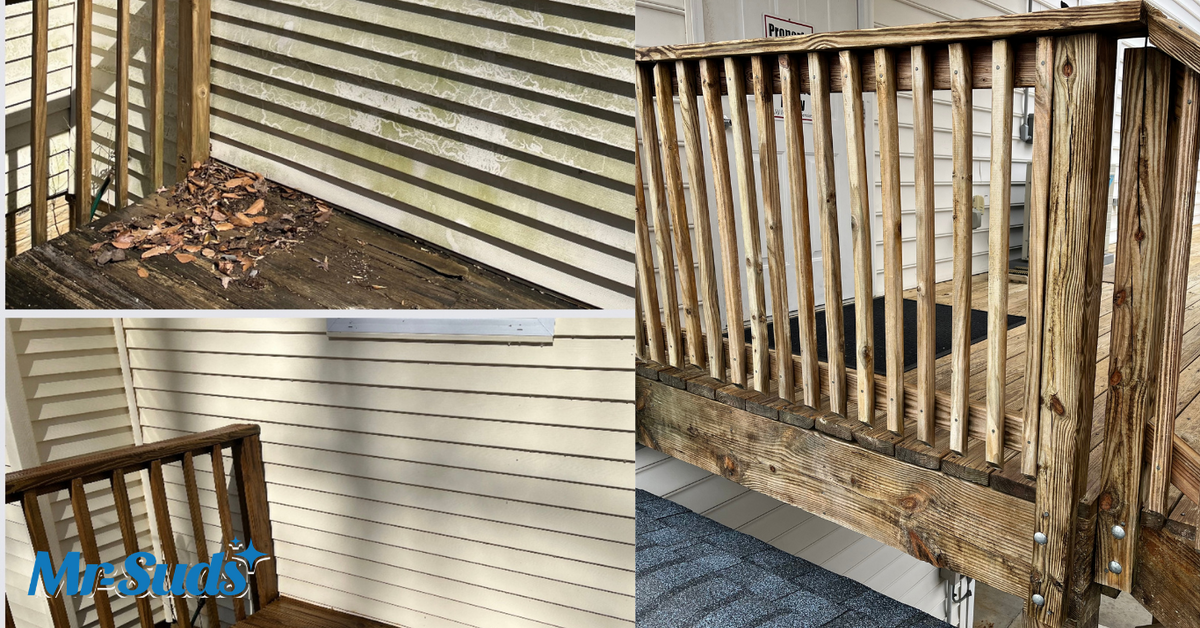
Wait until the wood is fully dry, which is usually 24 to 72 hours after washing. In dry, sunny weather, 24 to 48 hours is often enough. In humid or shaded conditions, give it 48 to 72 hours. As a rule, the wood should be below about 15 percent moisture before any sealer or stain goes on.
Rushing this step is the number one mistake we see. The surface fools people. It feels dry to the touch while the wood underneath is still holding water.
The simple water-bead test
You do not need fancy tools to check. Sprinkle a little water on the boards and watch what happens.
- If the water beads up and sits on top, the wood is still too wet. Wait longer.
- If the water soaks in within a few seconds, the wood is ready for sealer.
For a precise reading, a moisture meter from the hardware store works great. Below 15 percent and you are good to go.
Why Houston humidity changes the timeline
This is where local experience matters. Our air is damp for a big chunk of the year, and a shaded deck under the oaks dries even slower.
So here in Kingwood, we usually lean toward the 48 to 72 hour end. We also watch the forecast and pick a stretch with no rain coming.
Field note: This is exactly why we do not wash and seal on the same visit. The wood needs those dry days in between, and skipping them is how you get a blotchy finish.
Is It Better to Pressure Wash or Hand-Clean a Deck? (And What PSI Is Safe?)
Both methods work, and the right one depends on the wood and its condition. A pressure washer at the correct settings cleans fast and reaches deep into the grain. A scrub brush with a deck cleaner is safer on older or fragile boards. The key number is pressure. Most wood decks clean safely at 1,200 to 2,000 PSI with a wide-angle tip held a foot or so off the surface.
A pressure washer is a fantastic tool on a deck. It is also the fastest way to ruin one if you get heavy-handed. The trick is matching the pressure to the wood.
Safe PSI by wood type
Different woods take different pressure:
- Softwoods like pine, cedar, and redwood: stay around 1,200 to 1,500 PSI. Use the 40 degree tip.
- Hardwoods like ipe and mahogany: 1,500 to 2,000 PSI is safe.
Whatever you are cleaning, keep the wand moving, hold your distance, and always work with the grain.
How decks get damaged
Too much pressure, or a narrow tip held too close, does real harm. You can gouge the wood, raise the grain, and leave a fuzzy, splintered surface called furring.
Once wood is furred up, it feels rough underfoot and grabs dirt faster. That is the opposite of what you want.
When we hand-wash instead
Not every deck wants a machine. If the boards are old, soft, or already splintering, we often switch to a brush and a deck cleaner.
It takes longer, but on delicate wood it is the safer call. Knowing when to ease off is part of the job.
Field note: We once got called to look at a deck with light and dark stripes running across it. The homeowner had pressure washed in uneven passes and burned cleaning lines into the wood. We avoid that by keeping every pass smooth, overlapping, and at the same distance.
What Is the Best Thing to Wash a Deck With? (And What Not to Use)
The best cleaner is one made for wood, like an oxygenated deck cleaner (oxygen bleach). It lifts dirt, mildew, and gray without harming the wood fibers. For light, everyday cleaning, warm water with a little Dawn dish soap does the trick. What you want to avoid is chlorine bleach, which can break down wood fibers and lighten the color, along with wire brushes and undiluted vinegar.
The cleaner matters as much as the technique. The right product does the heavy lifting so you do not have to crank up the pressure.
What the pros use
For most decks, we reach for an oxygenated cleaner, also called oxygen bleach or sodium percarbonate. It is tough on mildew and gray but gentle on the wood.
For a stained or mildewed deck, a pre-soak helps. Let the solution sit, then agitate lightly with a soft brush before rinsing. That breaks the bond before any pressure even touches the boards.
Can you use Dawn dish soap on a wood deck? Will it clean it?
Yes on both counts. A squirt of Dawn in a bucket of warm water is a safe, effective way to handle light dirt and mild stains. It is gentle and will not harm the wood.
It is a great choice for a quick refresh between deeper cleanings. Just rinse well afterward.
Is Murphy’s Oil Soap good for cleaning decks?
Yes. Murphy’s Oil Soap is ammonia-free and safe for routine deck cleaning. Mixed with water, it cleans without stripping or damaging the wood.
Does vinegar damage a wood deck?
Used carefully, diluted vinegar can knock back mildew. Used carelessly, it causes problems. Left to soak in, or applied at full strength, vinegar leeches the color out of the wood and dries it out.
So we do not rely on it. A made-for-wood deck cleaner is safer and more effective.
What you should never use
Skip these on a wood deck:
- Chlorine bleach, which damages wood fibers and lightens color
- Wire or steel brushes, which scratch and splinter the surface
- Full-strength acids or harsh degreasers
Here is the quick reference we share with homeowners:
| Cleaner | Safe to use? | Best for | Watch out for |
| Oxygenated deck cleaner | Yes | Mildew, gray, deep cleaning | Follow dilution instructions |
| Dawn dish soap | Yes | Light dirt, mild stains | Rinse well, hard water residue |
| Murphy’s Oil Soap | Yes | Routine cleaning | None major |
| Vinegar | Use caution | Light mildew, diluted only | Leeches color if soaked or full strength |
| Chlorine bleach | Avoid | Not recommended | Damages wood fibers, lightens color |
Seal vs Stain: Can You Just Seal a Deck Without Staining It?
Yes, you can seal without staining. A clear sealer dries see-through, shows off the natural grain, and protects against moisture. The trade-off is sun protection. Clear sealers offer very little, so the wood grays faster and you reapply more often. A stain adds pigment, which blocks UV and lasts longer. If you love the current color, seal it. If you want lasting color and stronger protection, stain it.
This is one of the most common questions we hear, so let us make it simple.
What a sealer does versus what a stain does
A sealer is mostly about water. It keeps moisture out and lets the natural wood show, but it does little against the sun. Color from a clear sealer often fades within months, so you reapply more often.
A stain does more. It carries pigment that physically blocks UV, which is the main thing that grays a deck. Stain costs a bit more, but it holds up far longer.
Our honest recommendation
For most decks here in full Houston sun, a semi-transparent stain protects best. The pigment is what fights our intense UV.
A clear seal is a fine choice for newer wood or a shaded deck where you want the natural look. There is no single right answer, just the right answer for your deck.
Does a Deck Need Two Coats of Stain?
Not always. The real rule is to apply only as much stain as the wood can absorb. Older, dry, weathered boards often drink up two coats. New or dense hardwood frequently takes just one, and a second coat would only sit on top and peel later. Most semi-transparent penetrating stains need one solid, even coat on a well-prepped deck.
More is not better with stain. Anything the wood cannot soak in becomes a sticky film that fails.
One coat or two
It comes down to the wood and the product:
- Old, thirsty boards may take a second coat. Apply it wet-on-wet, before the first dries.
- New or dense wood usually accepts only one coat.
- Always check your stain’s label, since formulas differ.
If you see stain pooling or staying glossy on the surface, it has had enough. Wipe off the excess so it does not get tacky.
What Temperature Does It Need to Be to Seal or Stain a Deck?
Aim for 50°F to 90°F, with the sweet spot around 50°F to 85°F, on a dry day with no rain in the forecast for 24 to 48 hours. Below 50°F the finish struggles to soak in and cure properly. Above 90°F, especially in direct sun, the stain can dry too fast and lap or flash before it has a chance to penetrate.
Temperature controls how the finish cures, so it is just as important as a dry deck.
Too cold
When it is below 50°F, drying slows way down and adhesion suffers. The stain sits on top instead of soaking in.
The surface also should never freeze while it is curing. A cold night can ruin a finish you applied during a warm afternoon.
Too hot, the Houston problem
For us, heat is the bigger risk. In peak summer, a deck in direct sun can run far past 90°F, and stain applied to hot wood flashes off before it absorbs. That leaves lap marks and a thin, uneven finish.
The fix is to chase the shade. We work early in the day and follow the sun around the deck, staining sections while they are still cool.
What Time of Year Should You Seal a Deck? (Is November Too Late in Texas?)
Late spring and early fall are the classic best times, with mild temperatures and lower humidity. But here in Kingwood and greater Houston, your window is much wider than most online guides suggest. Because hard freezes are rare for us, you can often clean and seal on dry, mild days well into November and even winter. The calendar matters less than the conditions: dry wood, a dry forecast, and the right surface temperature.
Most deck advice online is written for cold northern climates. That advice does not fit Texas.
The national rule versus the Texas reality
Cold-climate guides tell you to finish staining by early fall before the freeze. That makes sense in Minnesota. It does not make sense here.
In our climate, cold is rarely the limiter. Our real obstacles are summer heat, high humidity, and finding a dry stretch between rains. That actually opens up the cooler months for great deck work.
Is it ever too late to seal a deck?
Not because of the season. The only time it is truly too late is when the wood has rotted or broken down beyond saving.
And even then, a thorough cleaning and restoration brings a lot of tired decks back. We save far more than we replace.
What about staining in winter?
In Houston, a mild winter day is often perfect. As long as the surface is above 50°F, the wood is dry, and no freeze or rain is coming, you can stain.
So if a homeowner asks us in November whether they missed their chance, the answer here is usually no. We just wait for the right dry, mild window.
Field note: Every fall someone tells us they figured deck season was over. In Southeast Texas, some of our best staining weather is in October and November, once the worst heat and humidity break.
What Is the Longest Lasting Deck Sealer? (And How Long Does Thompson’s Water Seal Last?)
Penetrating oil-based stains and sealers generally last the longest on a deck, often 3 to 5 years. Pigmented semi-transparent stains hold their color far longer than clear sealers because the pigment fights UV. Thompson’s Water Seal is popular and budget-friendly, but be realistic about it. The maker lists up to about two years on decks and longer on fences, and in real Houston sun and foot traffic, many homeowners get closer to one to two years.
There is no magic product that lasts forever. What lasts is the right product matched to good prep.
What makes a finish last
A few things decide how long your finish holds:
- Pigment. More color means more UV protection and longer life.
- Penetration. Oil-based finishes that soak in tend to outlast surface films.
- Prep. A clean, dry, properly cleaned deck holds any finish better.
- Exposure. Full sun and heavy foot traffic shorten the lifespan.
An honest take on Thompson’s Water Seal
We are not here to bash a product people like. Thompson’s is affordable and easy to find.
Just go in with the right expectations. Its UV protection and longevity are on the lighter side, so plan to reapply more often, especially on a sunny deck. If you want fewer touch-ups, a quality penetrating semi-transparent stain is the better long-term value.
How to Bring an Old, Gray Deck Back to Life
Reviving a gray deck is a four-step process. You inspect and repair, deep clean to strip away the gray and mildew, let the wood dry fully, then re-stain or seal to lock in fresh color. The secret step most people skip is a wood brightener after cleaning, which neutralizes the gray and reopens the grain so the new finish soaks in evenly.
That dull gray is not dirt. It is sun-damaged surface wood. Once you clean and brighten it off, the warm color underneath comes back.
Step 1: Inspect and repair
Before anything else, check the structure. Press a screwdriver into posts, joists, and railings. If it sinks into soft, spongy wood, you have rot that needs repair first.
Tighten loose boards and pop any raised nails or screws while you are at it.
Step 2: Deep clean and brighten
Wash with an oxygenated deck cleaner to lift the gray, dirt, and mildew. Then follow with a wood brightener.
The brightener is the step that makes old wood look new again. It balances the wood’s pH after cleaning and opens the grain for better stain absorption.
Step 3 and 4: Dry, then finish
From here you are back to the basics that run through this whole guide. Let the deck dry for that full 24 to 72 hours, then apply your stain or sealer in the right weather.
Field note: People are often shocked at how much life is left in a deck they assumed was done. We have brought back plenty of gray, sad-looking Kingwood decks without replacing a single board.
How Many Years Should a Wood Deck Last?
A well-maintained wood deck typically lasts 15 to 20 years. Pressure-treated lumber runs about 15 to 20 years, cedar lasts around 20 to 25, and tropical hardwoods like ipe can push past 25 and even reach 40 years. The single biggest factor is maintenance. Regular cleaning and resealing are what carry a deck to the top of its range instead of the bottom.
The wood you start with sets the ceiling. How you care for it decides whether you reach that ceiling.
What shortens a deck’s life
A deck rarely fails all at once. It is slow neglect that does it:
- Trapped moisture and standing water
- Mildew and algae left to grow
- Bare wood with no finish
- Sun damage with no UV protection
- Small repairs that get ignored
A simple Houston upkeep routine
Keeping a deck healthy here is not complicated:
- Wash it once a year to clear mildew and grime
- Reseal or restain every one to three years, sooner on a sunny deck
- Fix loose boards and fasteners as soon as you spot them
Stay on that rhythm and your deck stays an asset instead of a future tear-out.
Common Deck Washing and Sealing Mistakes (And How We Avoid Them)
The most common deck mistakes are sealing wet wood, using too much pressure or a narrow tip, cleaning with chlorine bleach, over-applying stain, and finishing in the wrong weather. Each one either damages the wood or causes the finish to fail early. The fix in every case is patience, the right products, and the right window.
After two decades, we see the same handful of mistakes again and again. Here they are, with the better move:
- Sealing wet wood. Wait the full 24 to 72 hours and run the water-bead test first.
- Too much pressure. Match PSI to the wood and use a wide-angle tip.
- Chlorine bleach. Use an oxygenated deck cleaner instead.
- Over-applying stain. Apply only what the wood absorbs, then wipe the excess.
- Wrong weather. Stay between 50 and 85 degrees, in shade, with no rain coming.
- Skipping the cleaning. Always wash before you seal or stain.
Avoid these six and you are already ahead of most DIY deck jobs.
Why Kingwood Homeowners Trust Mr. Suds With Their Decks
Our climate makes deck care its own challenge. The humidity stretches out dry times, the rain narrows your windows, and the summer sun bakes finishes fast. We know these conditions because we work in them every week, right here in Kingwood and across the North Houston Metro area.
Here is how we approach your wood:
- We assess the deck and match the pressure and method to the wood
- We clean away dirt, mold, and mildew without damaging the surface
- We protect your plants and landscaping before we start
- We tell you honestly when and how to seal, based on your wood and the weather
We are a small, family-owned business. Mr. Suds was established in 1995, and Brooke and I have run it since 2013. When you book us, it is me and my wife who show up, in uniform, fully insured, standing behind our work. Many of our customers have trusted us with their homes for over 20 years.
If your deck is looking gray, slick, or grimy, reach out for a free estimate. We will take a look, clean it the right way, and walk you through exactly what it needs next.
Call or text us at (281) 635-4507, or request your free estimate online.
Internal link suggestions: Link to the Wood Pressure Washing service page, the Gallery for real before-and-after photos, and About Us.
Frequently Asked Questions
Should I seal my deck after washing it? Yes. Washing leaves the wood clean but exposed, so sealing or staining afterward locks out moisture and sun. Just make sure the deck is fully clean and dry first, or the finish will fail early.
How long should I wait to seal after power washing? Usually 24 to 72 hours. Sunny and dry, 24 to 48 is often enough. Humid or shaded, give it 48 to 72. Test it first by sprinkling water and seeing if it soaks in.
Do I have to clean my deck before sealing? Yes, always. Sealer cannot bond to dirt, mildew, or old flaking finish. Clean, dry wood is the only surface that holds a finish properly.
Can I seal my deck without staining it? Yes. A clear sealer protects against moisture and shows the natural grain. The downside is weaker UV protection, so the wood grays faster and needs more frequent reapplication than a pigmented stain.
Does a deck need two coats of stain? Not always. Apply only what the wood can absorb. Weathered boards may take two coats, while new or dense wood often takes just one. Most penetrating semi-transparent stains need a single even coat.
What PSI is safe for power washing a deck? Around 1,200 to 1,500 PSI for softwoods like pine and cedar, and 1,500 to 2,000 PSI for hardwoods. Use a wide-angle 40 degree tip, keep your distance, and follow the grain.
Can I use Dawn or Murphy’s Oil Soap on my deck? Yes. Both are safe for wood. Dawn with warm water handles light dirt, and Murphy’s Oil Soap is fine for routine cleaning. For mildew and gray, an oxygenated deck cleaner works better.
Does vinegar damage a wood deck? It can. Diluted vinegar can fight light mildew, but full-strength or soaked-in vinegar leeches color and dries out the wood. A deck-specific cleaner is the safer choice.
How cold is too cold to seal a deck, and is November too late in Texas? Below 50°F the finish struggles to cure. In Houston, November is usually fine, since hard freezes are rare. On a dry, mild day above 50°F with no freeze coming, you can still stain.
How long does Thompson’s Water Seal last? The maker lists up to about two years on decks, but real-world results in Texas sun are often one to two years. Penetrating oil-based and semi-transparent stains tend to last longer, around 3 to 5 years.
How many years should a wood deck last? About 15 to 20 years for pressure-treated wood, 20 to 25 for cedar, and 25 to 40 for hardwoods like ipe. Regular cleaning and resealing make the difference.
Is it ever too late to save an old gray deck? Usually not. Unless the wood is rotted, a deep clean, a wood brightener, and a fresh finish bring most gray decks back to life without replacing boards.